
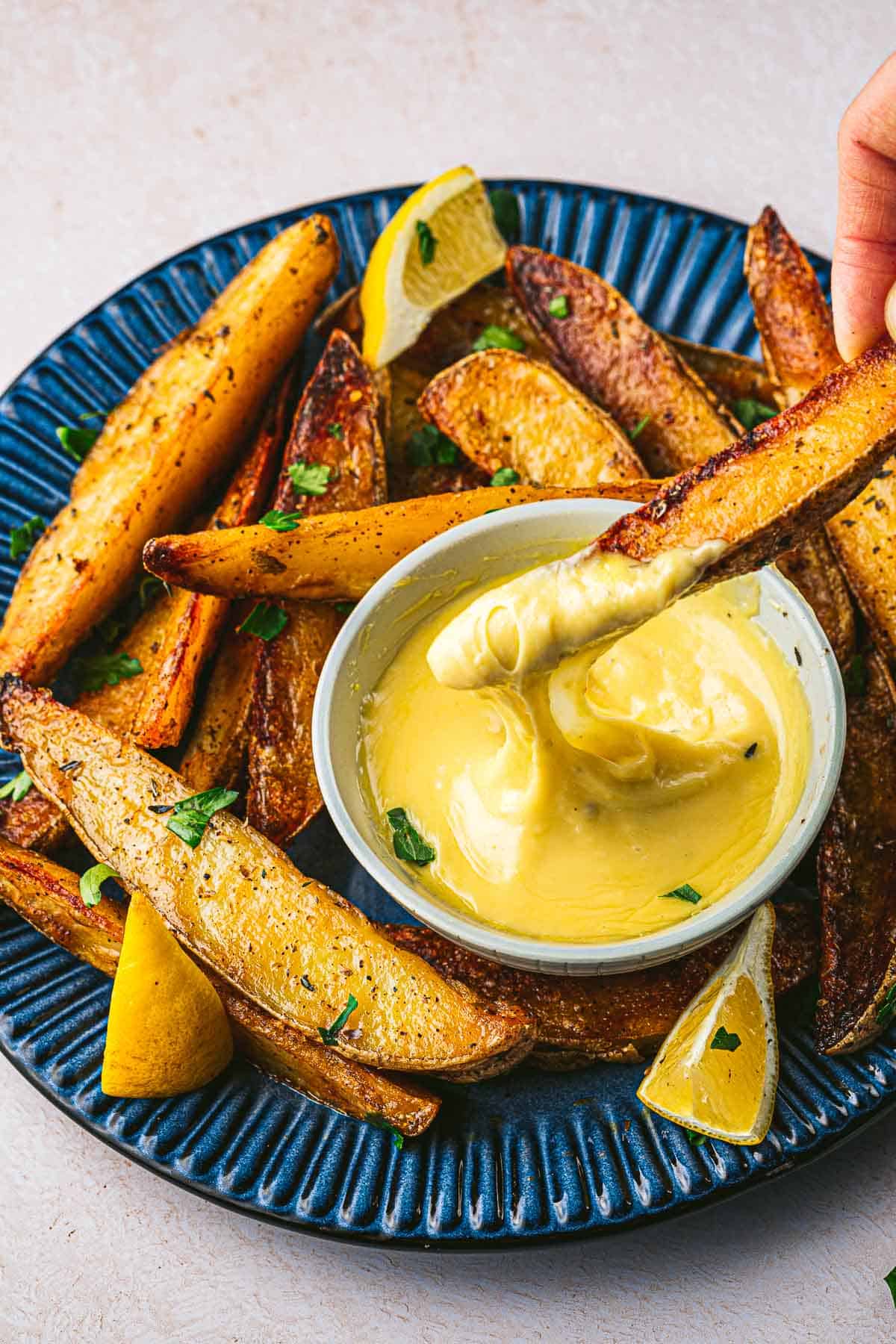
This simple garlic aioli recipe will teach you how to make the perfectly rich, lemony, and garlicky French condiment by hand with just 5 ingredients and a vigorous whisk!
What is the difference between Aioli, Alioli, Garlic Aioli and Mayo?
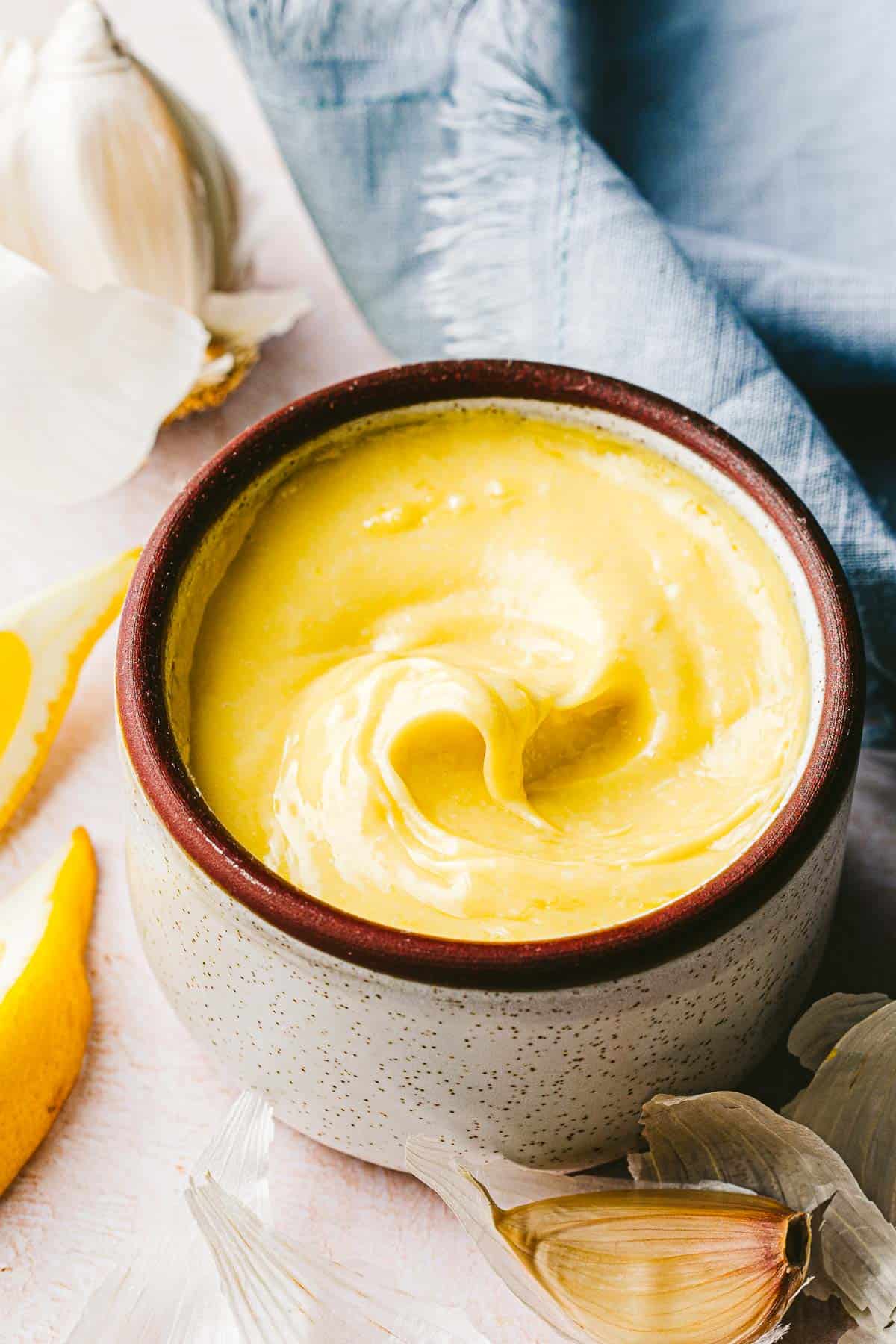
Aioli is a French condiment made by emulsifying egg yolk, garlic, and olive oil. It’s essentially hommade mayonnaise flavored with a bracing amount of fresh garlic. (Yes, “garlic aioli” is redundant, but it’s often how it’s labeled, just like how we say “pita bread” or “shrimp scampi.”)
When used in moderation or to enhance other recipes, aioli offers a spectacular flavor boost. Use it to enliven everything from fresh vegetables and soups to sandwiches. In my many years of working in restaurant kichens, I’ve prepared countless batches of this condiment, and I never get tired of it.
Hailing from the Provence region of Southern France, aioli is now beloved the world over, but aioli is also enjoyed in other countries with slight variations. In Spain, alioli, spcifically in Catalonia, where it’s spelled Allioli, was traditionally made with garlic pounded in a mortar and pestle with olive oil added drop by drop. However, today they often use an egg like the French and leave the mortar and pestle behind.
- In France, aioli is commonly served as a dip with fresh or cooked vegetables crudité-style or stirred into soups and stews like Bourride, a Provençal fish stew.
- In Spain, alioli is served with fish, grilled meat, or potatoes.
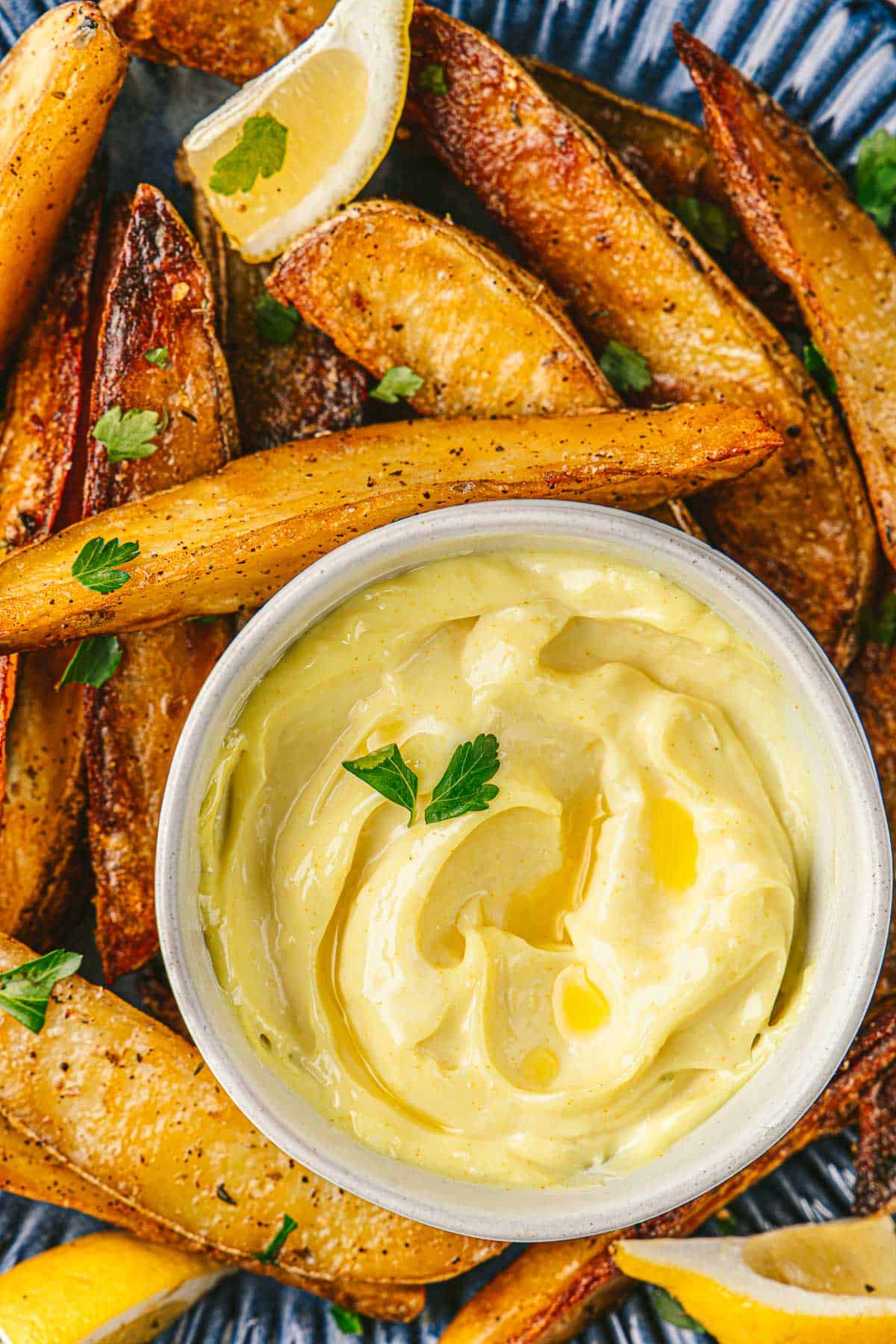
- While in the States, we often see “garlic aioli” on restaurant menus served alongside fries or slathered on a burger.
Why You’ll Love This Recipe
- This is an authentic Aioli recipe. It only takes 5 ingredients and 10 minutes. No shortcuts needed.
- Once you make it from scratch, you’ll never go back to making garlic mayo and calling it Aioli.
- Olive oil is the whole point! It gives aioli body and richness. Provençal aioli and Spanish alioli both use olive oil as the foundation of this indulgent sauce.
Why Homemade Aioli?
You could certainly make a “cheater’s aioli” by whisking lemon and garlic into store-bought mayo to save time. However, store-bought mayo is often made with low-quality oils and preservatives.
Just like making your own salad dressing, homemade aioli means you can use a high-quality extra virgin olive oil and seasonings. This makes a huge difference both in terms of flavor and texture. Plus, you just need a few pantry staples and a simple technique to make it!
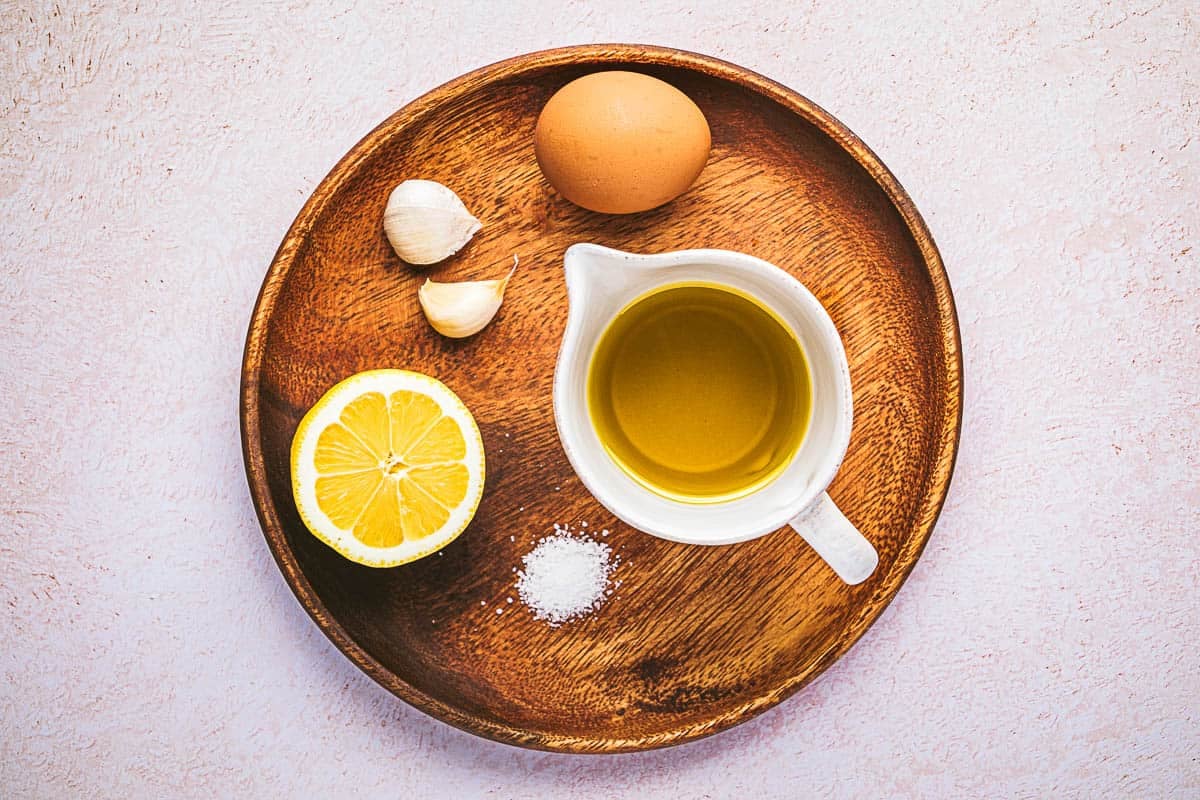
What is in Aioli?
Aioli dates back hundreds of years, with traditional recipes sometimes including boiled potato or even breadcrumbs in place of the egg yolk depending upon the region. But to make a modern-day aioli, you just need 5 basic ingredients:
- Garlic: Garlic is the main event here, and what distinguishes aioli from mayo.
- Egg yolk: An egg yolk gives aioli its thick, creamy richness. For an eggless version of aioli, try Toum.
- Extra virgin olive oil: A nutritious and flavorful alternative to neutral oil, which is often used in aioli recipes. I recommend a high-quality Italian olive oil like our Nocellara. Its mild, buttery taste and low bitterness won’t overpower the other ingredients, you can opt for a stronger olive oil like Spanish Hojiblanca for a more peppery bite.
- Lemon juice: A touch of acidity balances the richness of the egg and the oil.
- Kosher salt: Known for its large crystals and clean taste, kosher salt is my go-to seasoning. If your aioli tastes “flat” or “dull,” try adding a pinch more salt.
How to Make Aioli
Making aioli takes some patience–and sometimes practice–to get a nice emulsion between the oil and egg yolk. Go slowly, whisk constantly with a wire whisk (not silicone, which will be too gentle), and follow these easy steps (be sure to check out the tips and tricks below too!):
- Get ready: Shape a damp kitchen towel into a ring on your counter. Nestle a medium mixing bowl in the center. This will keep the bowl steady on the counter as you use both of your hands to assemble the aioli. Measure out 1/2 cup extra-virgin olive oil into a glass measuring cup with a spout and set aside.
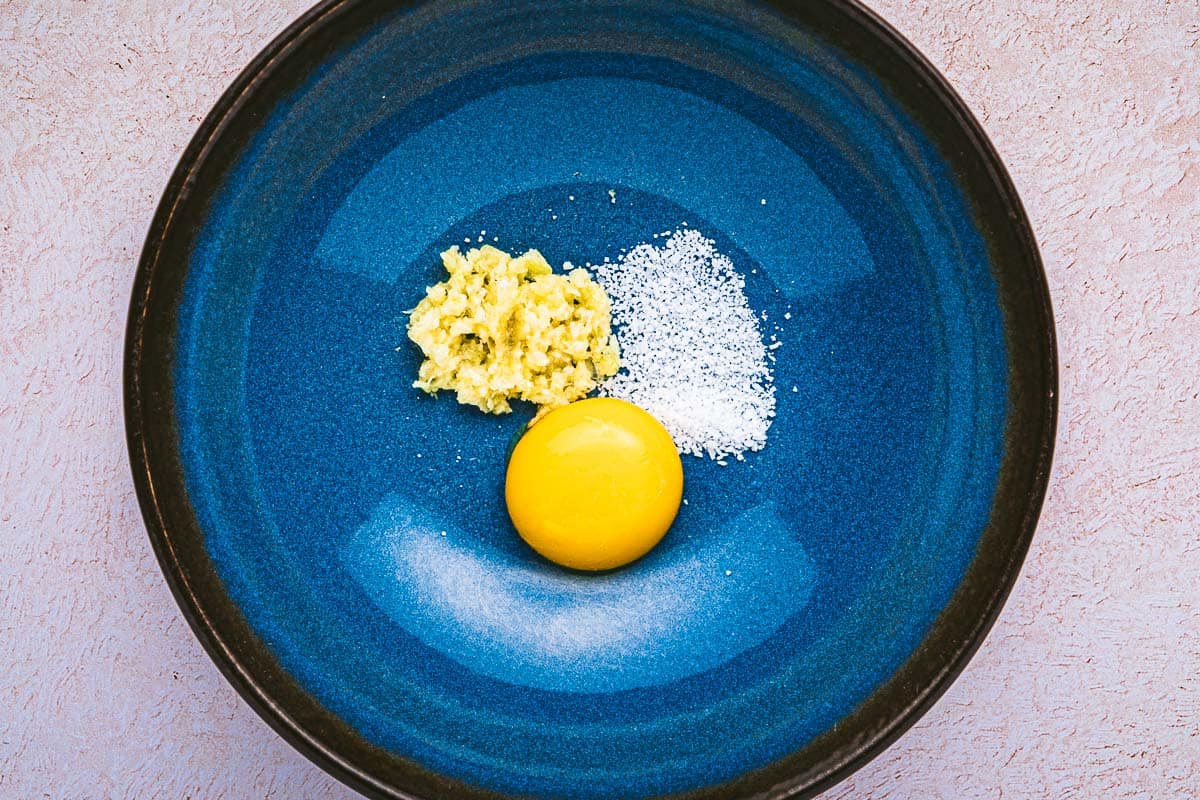
- Season the egg yolk: Into the bowl, add 1 large egg yolk (save the egg white for frittata or toasted lemon meringue). Season with 1/4 teaspoon of kosher salt. Use a microplane or the small side of a box grater to grate 2 garlic cloves into the bowl.
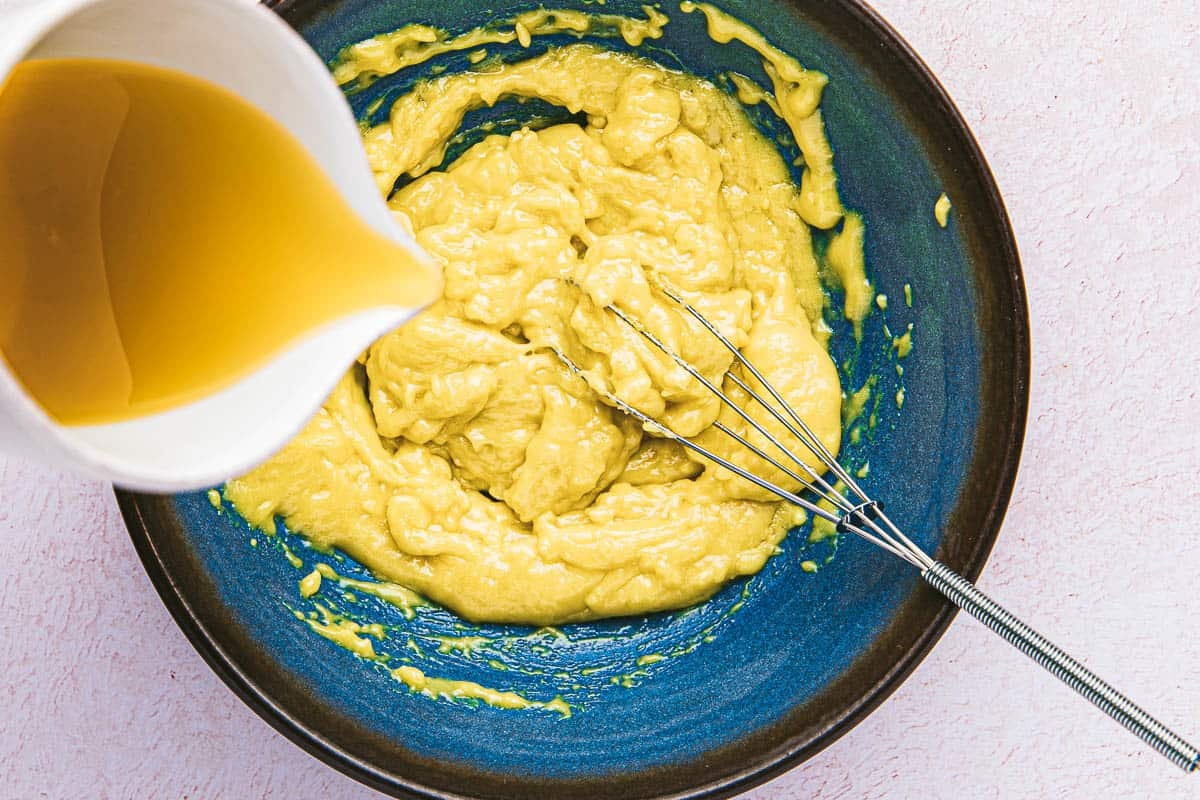
- Emulsify: Whisk the egg yolk mixture briefly to combine. Add olive oil a few drops at a time while whisking continuously. As the aioli begins to emulsify into the egg yolk, increase the oil to a steady, but very thin, stream as you whisk continuously. Going slow here is key to prevent the emulsion from breaking.
- Add the lemon juice: When all of the oil has been added, whisk to fully incorporate. Add 1 teaspoon of fresh lemon juice and whisk briskly to combine. Taste and add more salt and lemon juice, according to your preference.
Pro Tips, Tricks, and Troubleshooting From a Chef
The most common pitfall people face is that the aioli “breaks,” meaning the oil and the egg yolk don’t emulsify, and the aioli never thickens. Here are some tips and tricks to prevent and fix a broken aioli.
How to prevent garlic aioli from breaking
- Slow down: Add the oil very slowly, especially to start. Begin with just a drop or two of oil at a time. Once it starts to take shape, gradually increase to a very thin stream.
- Temperature: If it’s especially warm in your kitchen, place your tools and ingredients in the fridge for a half hour before getting started. Contrary to popular opinion, I find a cold yolk and oil helps with emulsification. I spent a summer in a busy cafe kitchen, where we made buckets of aioli for BLTs. The kitchen was so hot I struggled to keep my aioli from breaking, much to my extreme frustration! Eventually, we discovered it helps to keep everything very cold (including, sometimes, the food processor!).
How to fix broken aioli
- Option 1: Start over. Take a deep breath, try again, and add the oil more slowly the second time around. Make sure to use a wire whisk and whisk like your life depends on it!
- Option 2: Try adding another egg yolk. This can sometimes fix a broken aioli, but not always. If this doesn’t work, try whisking in a teaspoon of ice water. (This does not always work. If you’ll be devastated by another wasted yolk, it may be a better option to start over.)
Can I make aioli in a blender or food processor?
Yes, but with one very important modification. If you’re using a machine to make your aioli, I do not recommend using extra virgin olive oil. Instead, look for olive oil labeled “refined” or “for cooking.” When extra virgin olive oil is beaten at high speeds, the blades disperse the polyphenols normally coated by fatty acids. This can make their bitter flavor more prominent.
Aioli Variations Ways to Mix it Up
Think of this aioli recipe as a starting point–a blank canvass for so many flavors! Some ideas:
- Extra garlicky aioli: This aioli recipe is mild by traditional standards. Add as many as 6 cloves of garlic to really up that spicy kick.
- Roasted garlic aioli: Make a paste out of 1 whole head of roasted garlic, then whisk it into the egg along with 1/2 teaspoon of Dijon mustard.
- Green goddess aioli: Blend 1/2 avocado with 1/2 cup Greek yogurt, a few sprigs of fresh tarragon, chives, and parsley until bright green and smooth. Stir into the aioli and add more lemon juice to taste.
- Smoky red pepper aioli: Blend 1 roasted red pepper with 1/2 teaspoon of smoked paprika until smooth. Stir into the aioli and add salt to taste. This is great for dipping our Patatas Bravas into!
- Herby Aioli: Add 3 tablespoons of basil pesto or zhoug (spicy cilantro pesto) for an herbaceous kick.
- Spicy Aioli: Add 1-2 tablespoons Tunisian harissa paste.
- Quince Aioli:
What to Serve with Aioli
The traditional Le Grand Aioli in Provençal cuisine is a delicious summer meal for a crowd. Simply whisk up a batch of aioli and lay out a spread of seasonal vegetables.
- Try with crisp leaves of lettuce, boiled potatoes, blanched green beans, sliced cucumbers, cherry tomatoes and fresh or roasted radishes for dipping.
- Don’t stop there! Add Shrimp Skewers, broiled lobster tail, and jammy boiled eggs to your platter.
- Be sure to have lots of cold rosé on-hand or Rosé Lemonade to wash down this feast!
Bold and Creamy Mediterranean Dips
- Easy Tzatziki Sauce
- Traditional Toum (Whipped Lebanese Garlic Sauce)
- Tonnato (Italian Tuna and Caper Sauce)
- Turkish Tarator Sauce (Creamy Walnut Spread)

Aioli Recipe (Garlic Aioli)
#wprm-recipe-user-rating-0 .wprm-rating-star.wprm-rating-star-full svg * { fill: #343434; }#wprm-recipe-user-rating-0 .wprm-rating-star.wprm-rating-star-33 svg * { fill: url(#wprm-recipe-user-rating-0-33); }#wprm-recipe-user-rating-0 .wprm-rating-star.wprm-rating-star-50 svg * { fill: url(#wprm-recipe-user-rating-0-50); }#wprm-recipe-user-rating-0 .wprm-rating-star.wprm-rating-star-66 svg * { fill: url(#wprm-recipe-user-rating-0-66); }linearGradient#wprm-recipe-user-rating-0-33 stop { stop-color: #343434; }linearGradient#wprm-recipe-user-rating-0-50 stop { stop-color: #343434; }linearGradient#wprm-recipe-user-rating-0-66 stop { stop-color: #343434; }
Ingredients
- 2 cloves garlic, peeled
- 1/4 teaspoon kosher salt
- 1 egg yolk
- 1/2 cup extra virgin olive oil
- 1 teaspoon fresh lemon juice
Instructions
-
Get ready: Wet a kitchen towel and wring out until just damp. Shape the towel into a ring on the counter and nestle a medium bowl in the center. Place the oil in a measuring cup with a spout and set aside.
-
Season the egg yolk: Using a microplane or the smallest side of a box grater, finely grate the garlic into the bowl. Add the kosher salt and egg yolk. Whisk briefly combine.
-
Add the oil: Whisk the egg yolk mixture briefly to combine. Add olive oil a few drops at a time while whisking continuously. As the aioli begins to emulsify into the egg yolk, increase the oil to a steady, but very thin, stream as you whisk continuously. Going slow here is key to prevent the emulsion from breaking.
-
Finish the aioli: Once all oil has been added, whisk a few more times to ensure that the mixture is thoroughly emulsified. Whisk in lemon juice. Taste for salt and adjust accordingly.
Video
Notes
- Shop this recipe: Visit our shop to browse quality Mediterranean ingredients including the olive oil used in this recipe.
- Aioli, kept in a tightly sealed container, will keep for up to one week in the fridge.
-
How to fix broken aioli
- Option 1: Start over. Take a deep breath, try again, and add the oil more slowly the second time around. Make sure to use a wire whisk and whisk like your life depends on it!
- Option 2: Try adding another egg yolk. This can sometimes fix a broken aioli, but ot always. If this doesn’t work, try whisking in a teaspoon of ice water. (This does not always work. If you’ll be devastated by another wasted yolk, it may be a better option to start over.)
Nutrition
*This post has recently been updated with new information for readers’ benefit.
Bundle and Save!
Four of our best-selling signature olive oils, perfect for everyday use.
The post Aioli Recipe appeared first on The Mediterranean Dish.
PakarPBN
A Private Blog Network (PBN) is a collection of websites that are controlled by a single individual or organization and used primarily to build backlinks to a “money site” in order to influence its ranking in search engines such as Google. The core idea behind a PBN is based on the importance of backlinks in Google’s ranking algorithm. Since Google views backlinks as signals of authority and trust, some website owners attempt to artificially create these signals through a controlled network of sites.
In a typical PBN setup, the owner acquires expired or aged domains that already have existing authority, backlinks, and history. These domains are rebuilt with new content and hosted separately, often using different IP addresses, hosting providers, themes, and ownership details to make them appear unrelated. Within the content published on these sites, links are strategically placed that point to the main website the owner wants to rank higher. By doing this, the owner attempts to pass link equity (also known as “link juice”) from the PBN sites to the target website.
The purpose of a PBN is to give the impression that the target website is naturally earning links from multiple independent sources. If done effectively, this can temporarily improve keyword rankings, increase organic visibility, and drive more traffic from search results.
Jasa Backlink
Download Anime Batch