
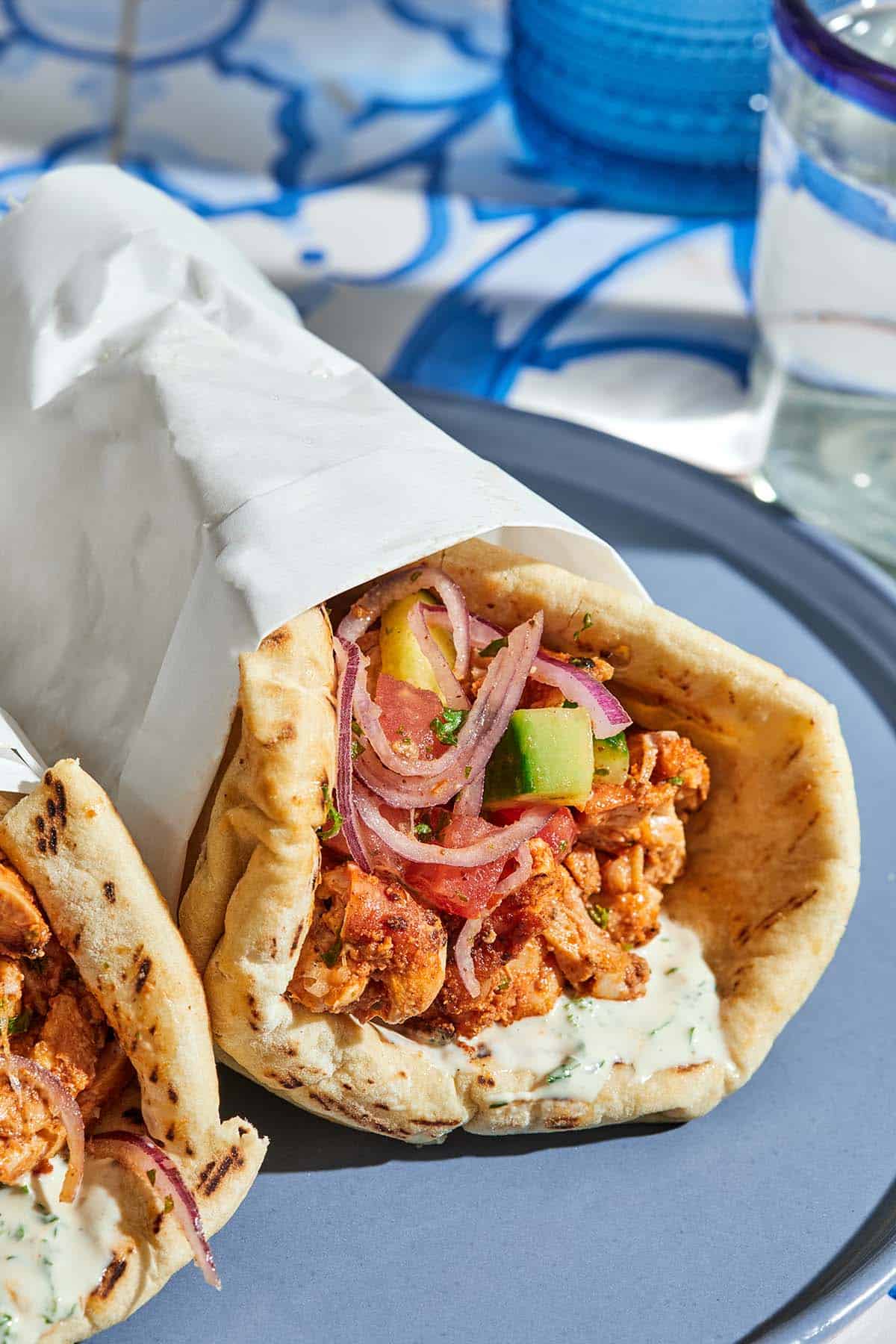
My delicious döner kebab recipe is a take on the popular Turkish kebab I had in Istanbul a few years ago. It’s made with juicy chicken thighs tossed in a bold yogurt marinade with lemon juice and loads of warm Middle Eastern flavors.
My Favorite Street Food from Istanbul
If you’ve had shawarma or gyros, then you’re likely familiar with doner kebab. Doner kebab is a popular Turkish street food with many delicious variations throughout the Eastern Mediterranean and the Middle East. You can find them made with lamb, beef, or chicken.
I had a taste of these delicious Turkish kebabs in Istanbul nearly a decade ago, and I’ve been hooked ever since! After some experimenting in my home kitchen, I’ve recreated the delicious kebabs using juicy chicken, tossed in a bold, garlicky yogurt marinade with lemon juice and loads of warm spices.
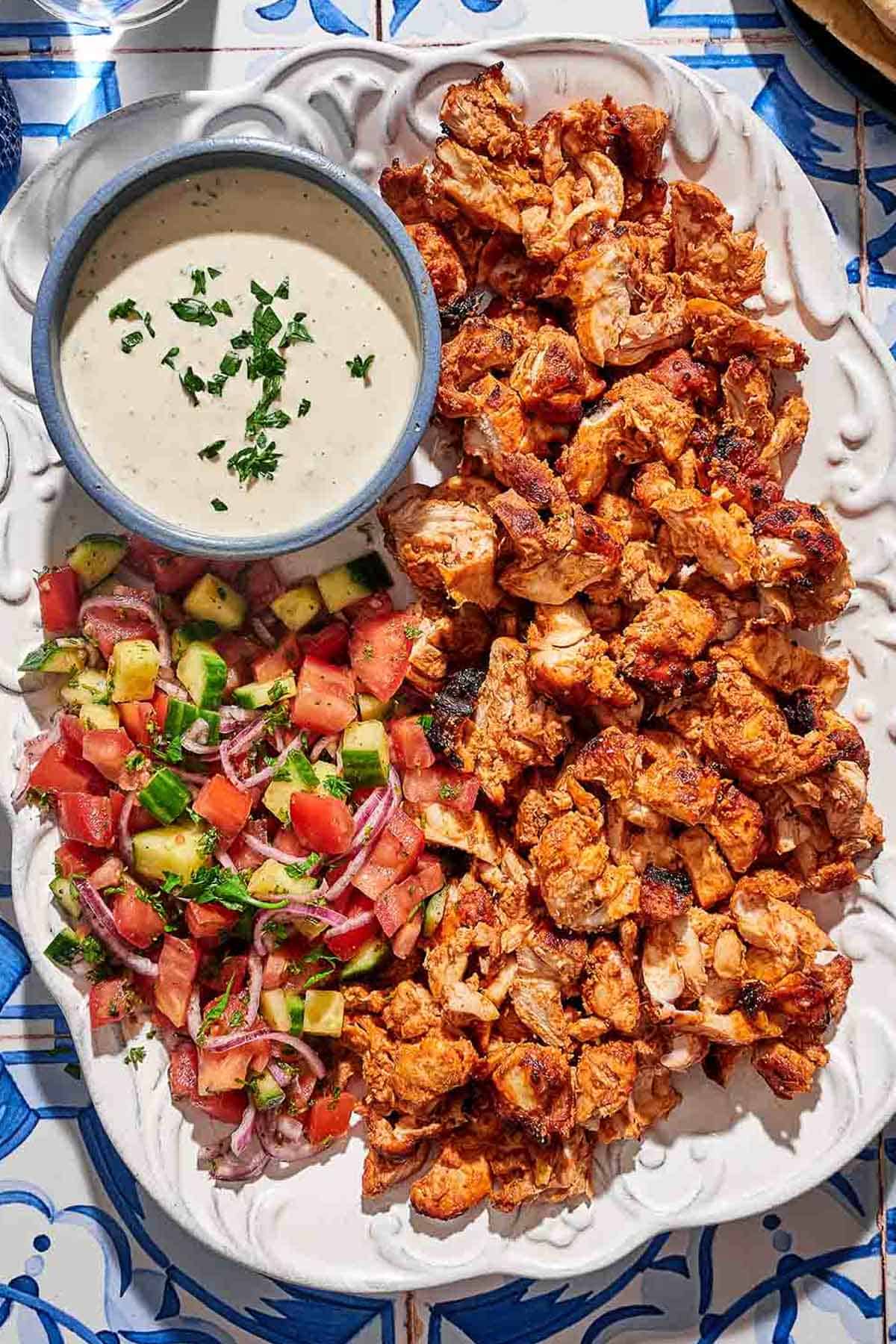
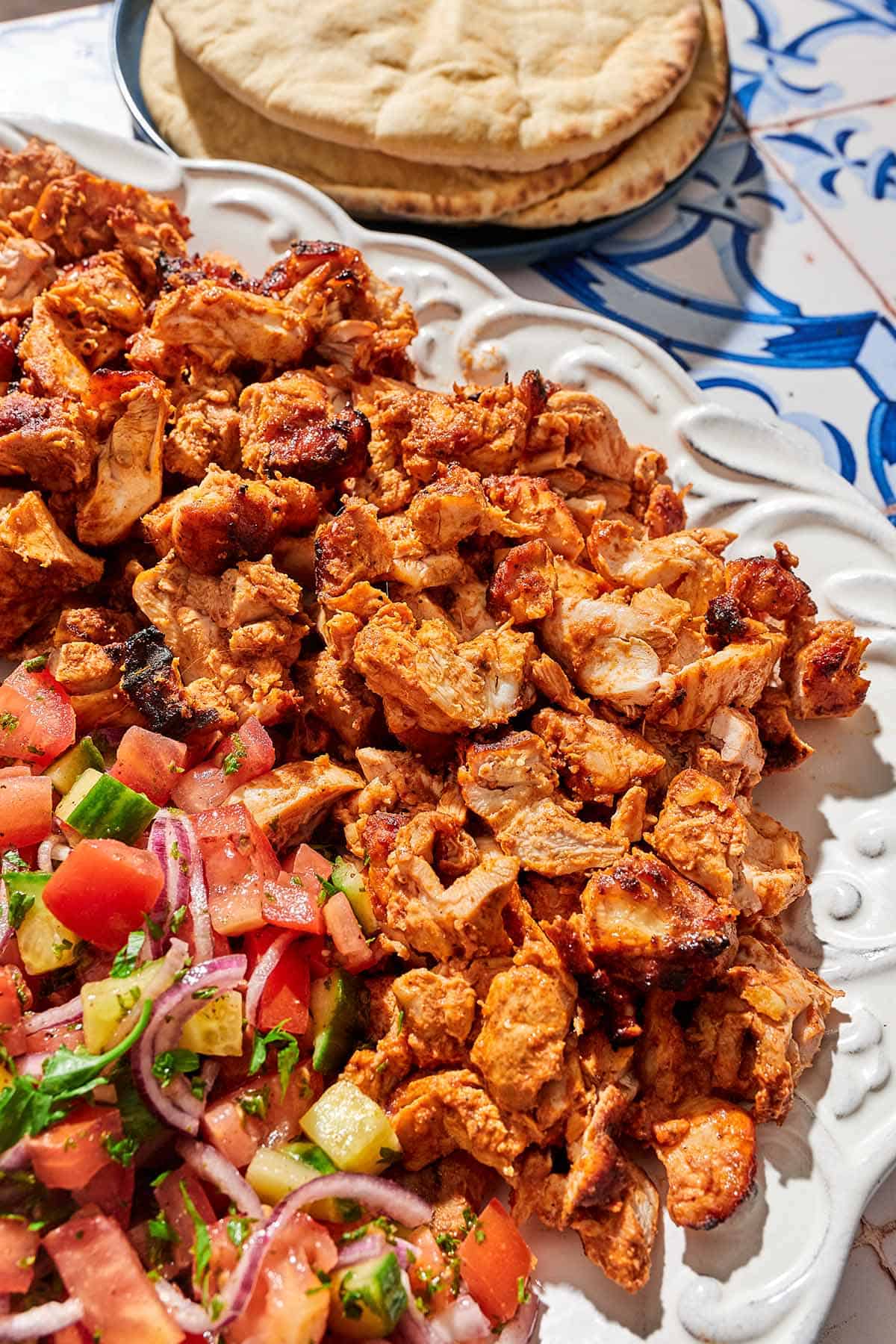
My doner kebab recipe is a close rendition that gives you tantalizing, thinly shaved grilled chicken you can serve in wraps, platters, or over your favorite salad (I tried it over fattoush recently).
What is Döner Kebab?
There are two main types of döner: et döner and tavuk döner.
- Classic döner kebab, et döner, consists of a heavily seasoned mixture of beef and lamb pureed into a paste, shaped into a log, and finally slow-roasted for hours on a vertical spit to juicy perfection. (Tail fat is often added to the meat mixture to keep it juicy and moist while it roasts.)
- Chicken doner, or tavuk döner, is just as popular in Turkey. Chicken is similarly seasoned and marinated in a flavorful yogurt-based marinade, then stacked onto a vertical spit and slow roasted.
To serve doner kebab, the outer layer of charred meat goodness is thinly shaved off the spit, using a large, sharp knife, in a top-to-bottom motion. Yes, at that moment, the meat or chicken is meltingly tender and is made even more perfect when you add a warm, pillowy pita and flavorful fixings.
Doner Kebab Ingredients
My yogurt-based marinade infuses the chicken with flavor while the lactic acid in the yogurt tenderizes it. While the seasonings may vary from one doner kebab recipe to another, my marinade is closest to the Turkish and Eastern Mediterranean flavors I experienced when I visited Istanbul. Here is what you need for the marinade:
- Whole milk yogurt: Yogurt-based marinades are very gentle on meat. With its lactic acid and calcium content, yogurt gently breaks down the proteins in the chicken, giving you perfectly tender, juicy results.
- Tomato paste: You’ll need a small 6-ounce can to give the chicken its deep red color and plenty of umami and tang.
- Lemons: Zest and juice 2 lemons to give the chicken doner kebabs bright acidity, and to work with the yogurt to tenderize the meat.
- Garlic: You don’t want to skimp on the garlic here. I used 8 minced cloves to add enough punchy, garlicky flavor to this marinade.
- Spices: Baharat spice blend, ground cumin, Aleppo pepper (if you like it spicy, you can include a dash of cayenne pepper as well), and smoked paprika, which adds a deeper, smoky taste that mimics the flavor of slow-grilled chicken.
- Chicken thighs: I always recommend using thighs when making Doner Kebabs because the meat stays tender without drying out.
How to Make Doner Kebabs
For this chicken doner kebab recipe, boneless, skinless chicken thighs will give you the best results. I don’t cut the chicken into smaller pieces. The larger pieces, stacked on the skewer or a home grill spit, will give you far juicier, more delicious results.
These grilled Turkish kebabs are not overly complicated. I promise, skewering the chicken will be the only part where you’ll spend a little more time. And, if you do have the time, budget a couple of hours for the chicken to marinate. I give you two ways to cook doner kebabs: on the grill or in the oven.
Note that you can feed a crowd of up to 8 people with this recipe, but to make it for a smaller group of 4, simply cut the recipe in half. (Or just save the leftovers to enjoy the next day!)
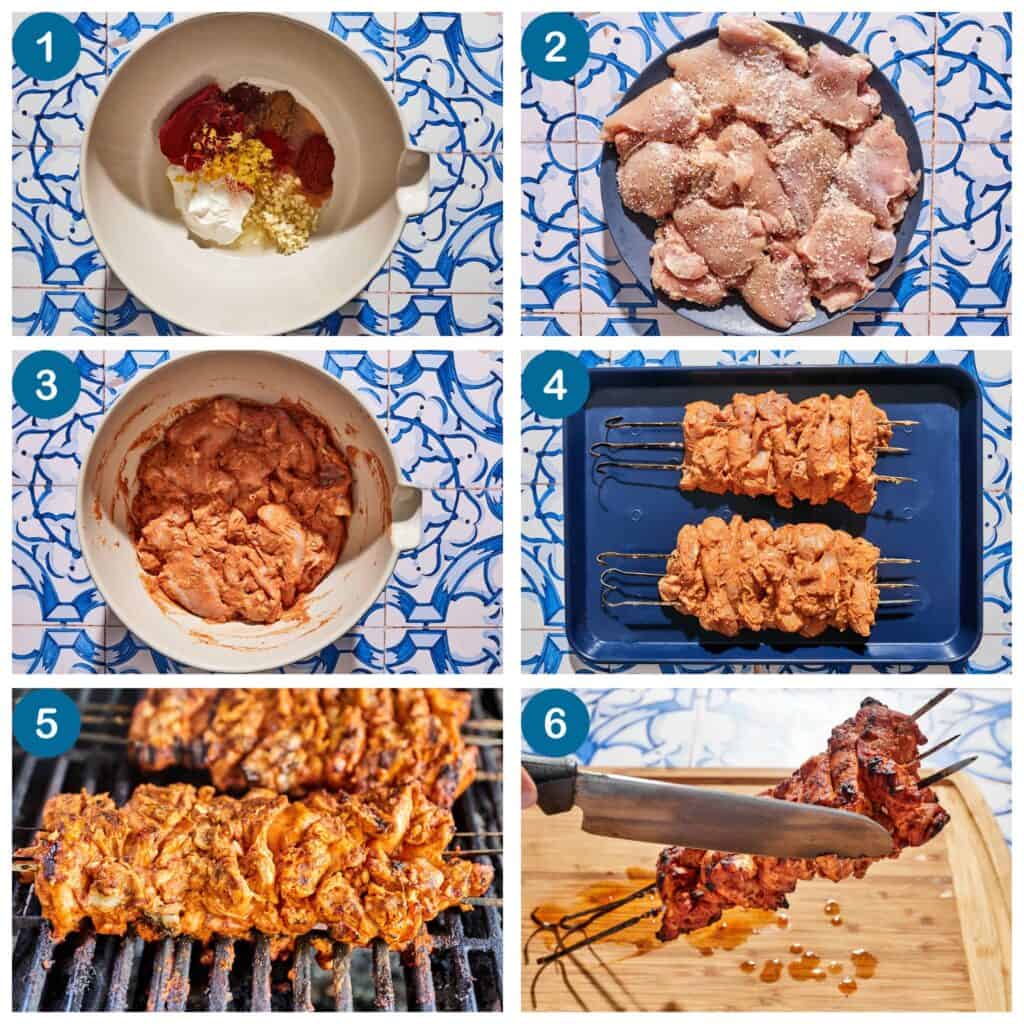
- Marinate the chicken thighs. Start by making the marinade in a large bowl by combining ½ cup whole milk yogurt, 6 to 7 tablespoons tomato paste, the zest and juice of 2 lemons, 8 minced garlic cloves, 2 ½ teaspoons baharat, 2 teaspoons cumin, 1 teaspoon Aleppo pepper (or more if you want it spicier), and 1 teaspoon smoked paprika.
- Add the chicken: Pat dry 2 to 3 pounds of whole boneless skinless chicken thighs and season them with kosher salt and black pepper on each side. Then, toss the chicken in the marinade. If you have time, refrigerate the chicken in the marinade for 3 hours up to overnight. If not, let it sit at room temperature for about 30 minutes. But know that your chicken will definitely taste better if you let it marinate for a few hours.
- Skewer the marinated chicken. Thread half of the chicken thighs onto three metal skewers or a grill spit. (Using 2 or 3 metal skewers helps to steady the chicken as you rotate the skewers over. Essentially, the 3 skewers mimic a big spit.) Make sure the chicken is quite snug on the skewers. To make it easier, prop the skewers on the edge of a pan or bowl. If the thighs are very large, you can fold them in half before threading them through the skewers. Repeat with the rest of the chicken thighs, using 3 more metal skewers. Once you’ve prepared the doner skewers, you have two options for cooking them: on the grill or in the oven.
- To cook Doner Kebabs on the grill: Heat the grill to 400°F (which is medium-high heat on my grill). Place the skewers on the grates and close the grill. Cook for 10 to 15 minutes until the meat has crispy charred bits on the edges, then turn over and cook for another 10 or so minutes, until it reaches 160°F. Remove from the grill and let rest until the internal temperature of the chicken reaches 165°F.
- To cook doner kebabs in the oven: Heat the oven to 400° and arrange the kebabs on a large baking dish or sheet pan with sides so the metal skewers rest on the edges of the pan. There should be some room between the chicken and the bottom of the pan. Bake on the center rack of the oven for 30 to 35 minutes until golden brown and charred in some parts. Use oven mitts to turn the skewers over and brush the chicken with the pan juices. Bake again for 20 minutes until the chicken reaches 160°F. Remove from the oven and allow it to rest for 5 to 10 minutes, until it reaches an internal temperature of 165°F.
To Serve
- Carve: Prop the skewers vertically at a slight angle, holding them in your non-dominant hand. With a sharp knife in your dominant hand, carefully slice the meat thinly from top to bottom. If this is too difficult for you, simply pull the chicken thighs off the skewers first. Then place them on a cutting board, and cut them into thin, small slices. It won’t look the same, but it will still taste great. It’s more important to do it safely.
- Serve: Pile on a pita with pickled vegetables, tomato and cucumber salad, and tahini sauce.
3 Ways To Enjoy Doner Kebabs
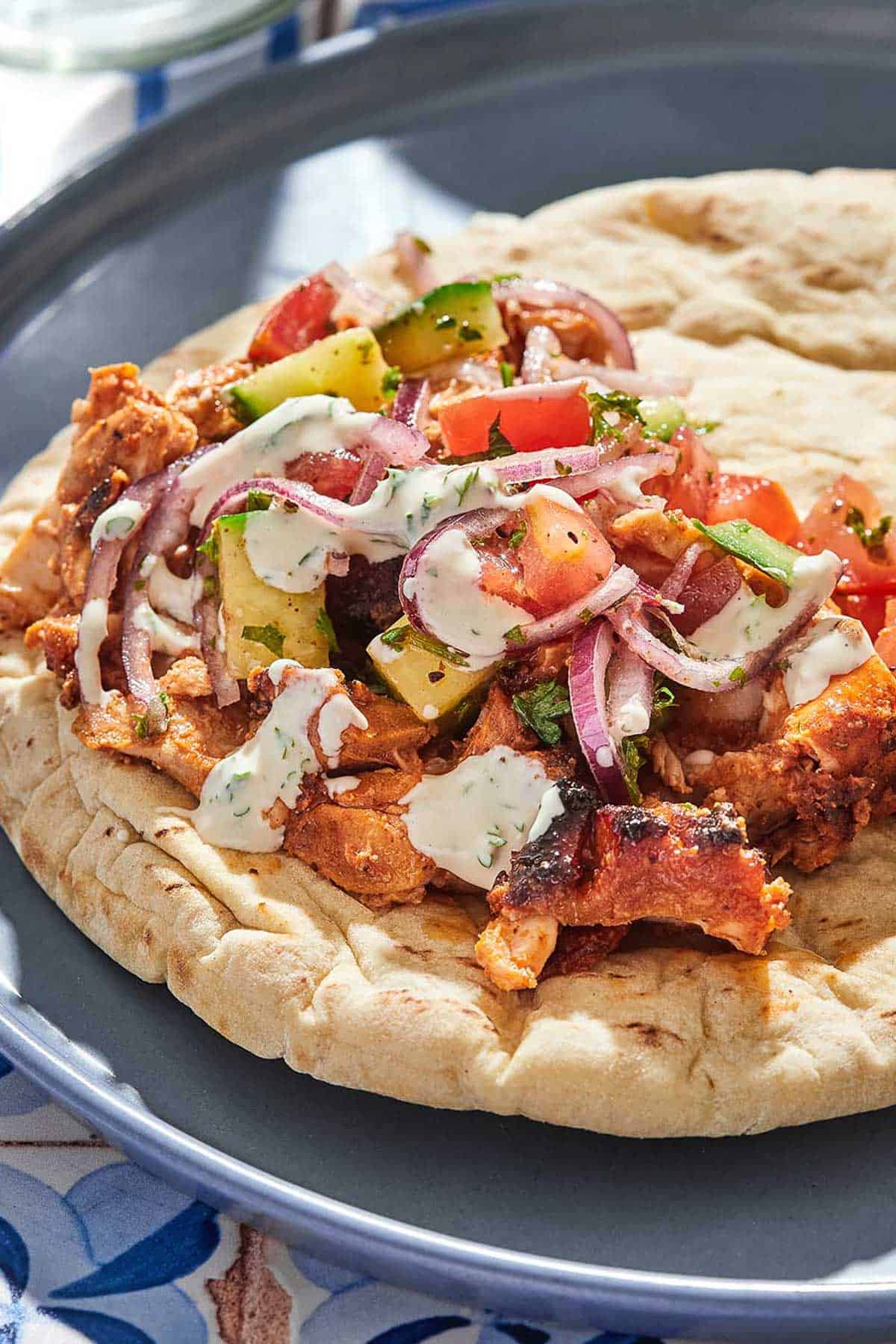
You can serve doner kebabs a few different ways: in wraps, platters, or salad bowls. I’m partial to doner wraps in warm pita, but here are some more ideas for how to this recipe:
- Doner wraps: Warm up pita bread, top with chicken, and fresh tomatoes and onions, or my Mediterranean cucumber and tomato salad. Add some pickles (cucumber, pickled onion, or turnip, if you like). For a sauce, you can do a yogurt sauce or tahini (not traditional, but delicious). Fold the pita to form a wrap, and enjoy!
- Bowls or plates (a great low-carb option): You could make a doner kebab plate or bowl. Spoon some salad and sliced chicken onto a plate or into a bowl and drizzle with sauce.
- Doner over rice (called pilav üstü döner in Turkey): This is where you serve the chicken or meat doner on a bed of Turkish rice. In my house, we sometimes serve it over a little golden Middle Eastern rice pilaf with some salad and sauce on the side.
The Difference Between Doner Kebab, Gyros, and Shawarma
You’ll find some similarities in the preparation of doner kebabs, shawarma, and gyros. In fact, the names of these dishes mean similar things. Döner comes from the Turkish word dönmek, which means “to turn” or “to rotate.” Shawarma means “to turn” in Arabic, and gyro means “round” in Greek.
But since all three come from different parts of the Mediterranean and Middle East, there are a few key differences. Aside from their different geographical origins, each of these popular street foods has its own unique flavor profile.
- Doner kebab seasoning is a tad more generous on cumin, paprika (I like smoked paprika here), and red pepper flakes or Aleppo pepper.
- Shawarma seasoning uses cumin, supported by other warm Middle Eastern spices, often including coriander, turmeric, and ground cloves.
- Gyro seasoning is Greek-style, with a hefty amount of dried oregano.
You can serve all three dishes in platters or wraps with varied fixings, pickles, and sauces. Opt for tahini with shawarma; tzatziki with gyro; and, for doner kebabs, some skip the sauce, while others will use a red sauce or a garlicky yogurt sauce called Haydari.
How to Store
To store: Leftover chicken doner kebabs will keep in an airtight container in the fridge for up to 4 days. This makes them a great option for workday lunches for my meal prep people!
To reheat: arrange the sliced chicken on a large baking sheet. Heat in the oven at 350°F until warmed through.
Make a Turkish Feast
Turkey is rich with flavorful and exciting recipes. If you’re making doner kebabs you might as well make it a feast and serve it alongside recipes like Ayran, a cooling Turkish yogurt drink, and Haydari, a garlicy herby yogurt sauce commonly served with doner kebabs or as part of a mezze. And wrap things up with a bean and egg salad, called Tahinli Fasulye Piyazi.
More Kebab Recipes to Try
- Kofta Kebab
- Shish Kabob
- Shish Tawook (Middle Eastern Grilled Chicken)
- Juicy Grilled Chicken Kabobs
Doner Kebab (Tavuk Döner)
#wprm-recipe-user-rating-0 .wprm-rating-star.wprm-rating-star-full svg * { fill: #343434; }#wprm-recipe-user-rating-0 .wprm-rating-star.wprm-rating-star-33 svg * { fill: url(#wprm-recipe-user-rating-0-33); }#wprm-recipe-user-rating-0 .wprm-rating-star.wprm-rating-star-50 svg * { fill: url(#wprm-recipe-user-rating-0-50); }#wprm-recipe-user-rating-0 .wprm-rating-star.wprm-rating-star-66 svg * { fill: url(#wprm-recipe-user-rating-0-66); }linearGradient#wprm-recipe-user-rating-0-33 stop { stop-color: #343434; }linearGradient#wprm-recipe-user-rating-0-50 stop { stop-color: #343434; }linearGradient#wprm-recipe-user-rating-0-66 stop { stop-color: #343434; }
Ingredients
- 3 to 4 pounds boneless skinless chicken thighs, 10 to 12 chicken thighs
- Kosher salt
- black pepper
For the marinade:
- 1/2 cup whole milk yogurt
- 1 (6-ounce) can tomato paste,
- 2 lemons, zested and juiced
- 8 garlic cloves, minced
- 2 1/2 teaspoons Baharat spice blend
- 2 teaspoons cumin
- 1 teaspoons Aleppo pepper, more if you like it spicy (you can also add a dash of cayenne)
- 1 teaspoon smoked paprika
Sauce (choose)
- Tahini sauce, use this recipe
- Hummus, use this recipe
- Yogurt sauce, use this tzatziki recipe
To serve in wraps
- pita bread
- 2 tomatoes, halved and sliced
- 1 onion, halved and sliced
- 1 English cucumber, halved and sliced
To serve on plates or platters
- rice, use this Middle Eastern rice recipe
- salad, try Mediterranean tomato and cucumber salad or shirazi salad.
Instructions
-
Make the marinade: In a large mixing bowl, add the yogurt, tomato paste, lemon zest, lemon juice, garlic, and spices. Mix well to combine.
-
Season the chicken: Pat the chicken dry and season well with kosher salt and black pepper on each side.
-
Marinate: Add the chicken to the marinade and toss to make sure each piece is well-coated with the marinade. If you have the time, I highly recommend you cover and refrigerate the chicken for 3 hours or up to overnight. Otherwise, allow the chicken to sit in the marinate at room temperature for 30 minutes or so while you prepare the fixings/sides and heat up the grill (or your oven). (You’ll get better results of you let the chicken marinate longer).
-
Skewer the chicken: Divide the chicken thighs into two piles. Using a set of 2 to 3 metal skewers at a time, thread the first pile chicken thighs through, and push them snug against each other. (It helps to prop the skewers on the edges of a pan or a bowl. And if your chicken thighs are too large, you can fold them each in half and thread them through). Repeat with another set of 2 to 3 skewers to thread the second pile of chicken on.
-
To cook on the grill: Heat the grill to 400 degrees F (for my grill, this would me medium-high heat). Arrange the kebabs on grates and close the grill. Cook for about 10 to 15 minutes on one side until nicely charred, then turn over and cook for another 10 to 15 minutes or until the chicken is cooked through and no longer pink in the middle (a total of 20 to 30 minutes, depending on the size of the chicken thighs).
-
To cook in the oven: Heat the oven to 400 degrees F. Using a large pan with edges or walls, arrange the kebabs on top of the pan such that the metal skewers are resting on the edges (or walls of the pan) with some room between the chicken and the bottom of the pan. Put the pan on the middle rack of your heated oven. Roast for about 30 to 35 minutes until the surface is golden brown and charred in some parts. Remove the pan from the oven and carefully turn the skewers over, brush the top of chicken with the pan juices and return the pan to the oven for another 20 minutes (longer if you have larger pieces). You’ll cook the kebabs in the oven for anywhere between 50 minutes to 1 hour or until the chicken is cooked through and no longer pink in the middle.
-
Rest: Remove the chicken off the heat and allow it to rest for 5 to 10 minutes.
-
Carve or shave the chicken off the skewers: Prop the skewers upright on a slight angle. Using a sharp knife (held in your dominant hand), slice the meat thinly from top to bottom or however you’re able to do it safely.
-
Serve in pita wraps or plates. For more traditional doner kebabs, use a loaf of pita bread to wrap some of the chicken in, adding your sauce and sliced vegetables (or one of the salads listed above). Alternatively, you can serve kebab plates by arranging the chicken next to (or over) a bed of Middle Eastern rice with your salad and sauce to the side.
Video
Notes
- What cut of chicken to use for these kebabs? Boneless skinless chicken thighs give you the juiciest, most flavorful results here.
- How long to cook chicken thighs? I like to pull the chicken kebabs off the heat when its internal temperature is around 160°F, keeping in mind that the chicken will continue to cook even as you take it off the heat and allow it to rest for a few minutes. The chicken’s internal temperature should be 165°F when you serve it.
- Leftovers and storage: Leftover chicken doner will keep in an airtight container in the fridge for up to 4 days. Reheat on a large baking sheet in a 350°F heated oven until warmed through.
- Note: The nutritional information is for the chicken doner kebabs only, and does not take into account any fixings.
- Visit our shop to browse our all-natural and organic spices (like the Baharat, Aleppo pepper, cumin, and smoked paprika used in this recipe), olive oils, and much more!
Nutrition
The post Döner Kebab with Chicken appeared first on The Mediterranean Dish.
PakarPBN
A Private Blog Network (PBN) is a collection of websites that are controlled by a single individual or organization and used primarily to build backlinks to a “money site” in order to influence its ranking in search engines such as Google. The core idea behind a PBN is based on the importance of backlinks in Google’s ranking algorithm. Since Google views backlinks as signals of authority and trust, some website owners attempt to artificially create these signals through a controlled network of sites.
In a typical PBN setup, the owner acquires expired or aged domains that already have existing authority, backlinks, and history. These domains are rebuilt with new content and hosted separately, often using different IP addresses, hosting providers, themes, and ownership details to make them appear unrelated. Within the content published on these sites, links are strategically placed that point to the main website the owner wants to rank higher. By doing this, the owner attempts to pass link equity (also known as “link juice”) from the PBN sites to the target website.
The purpose of a PBN is to give the impression that the target website is naturally earning links from multiple independent sources. If done effectively, this can temporarily improve keyword rankings, increase organic visibility, and drive more traffic from search results.
Jasa Backlink
Download Anime Batch