
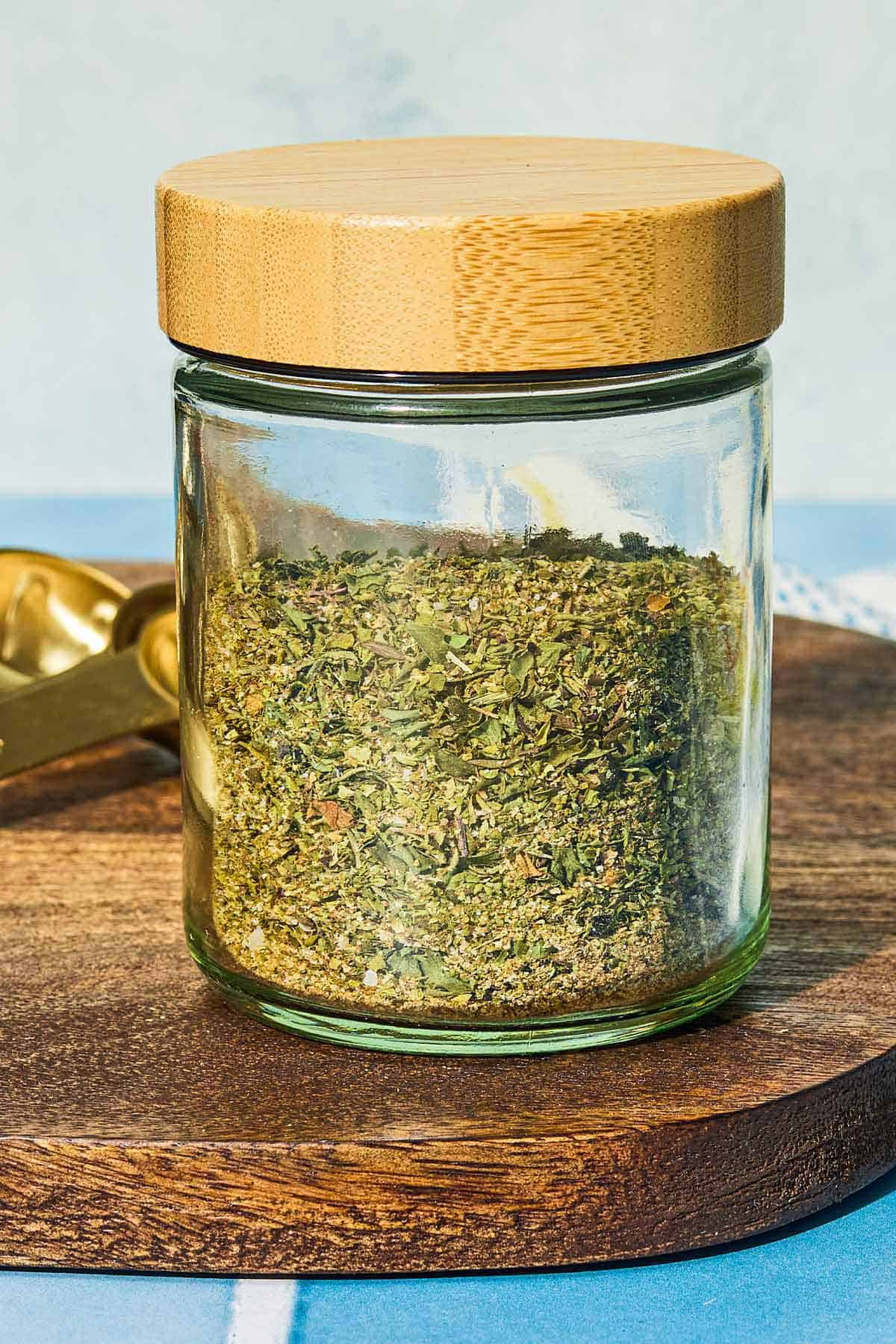
The recipe for this Greek seasoning is a blend of dried herbs, warm spices, and savory aromatics. It’s an easy way to add flavor to meat, vegetables, potatoes, or anything else you can think of!
My quick and easy Greek seasoning mix
You know I don’t hesitate to pull out five or six jars of herbs and spices to make dinner, but even for me, this homemade Greek dressing is a welcome option!
I mixed this mix up a few weeks ago when I was spring cleaning out my spice drawer, and ever since then it’s been something I reach for all the time. I rubbed it on chicken thighs before roasting them, whisked it into olive oil with lemon juice for a quick salad dressing, and shook it on potatoes before baking.
It only takes a minute to make your own Greek seasoning, and it tastes so much better than anything I’ve found in a jar at the grocery store.
A good homemade Greek dressing should start with dried oregano, parsley, thyme, and basil. These Mediterranean herbs form a green, earthy base, giving you that recognizable herbal scent. But one thing that really sets this blend apart from my Italian seasoning is that the Greek oregano is definitely the leader.
I also think it’s important to include some warmth to give it depth. I added cinnamon and cumin to my recipe because that’s what separates the basic herb mix from tasting exactly like the authentic Greek cuisine we love. It creates a thin, warm base that reminds me of traditional dishes like moussaka or sotsukakia, baked Greek meatballs.
Main ingredients
- Greek oregano it’s the special ingredient that really makes this recipe. Our store has a great one that I use in my kitchen every week.
- Dried parsley milder than fresh and I like it as a counterpoint to the peppery oregano.
- Dried thyme it’s an herb you might associate with French cooking, but it’s also an essential flavor in Greece, where it grows wild on rocky hillsides. In fact, it is so common that you can taste its aroma in our Greek honey! This adds a woody base to the mix.
- Dried basil adds a subtle sweetness reminiscent of licorice, or ouzo, a favorite of this summer sipper.
- Garlic and onion powders: The savory flavor that these two aromatics bring is what makes this seasoning so versatile that it works equally well as a grill rub. Use powder or granules, both will work.
- Ground cinnamon and cumin add wonderful warmth to this mix. Cinnamon is the secret ingredient in many Greek dishes, including these Greek Baked Beans.
- Kosher Salt and pepper optional! You can make this seasoning without salt and pepper and add them separately to everything you cook. It’s best if you’re watching your sodium intake. Note that I use diamond crystal kosher salt and table salt is about twice as salty by volume.
How to make homemade Greek seasonings
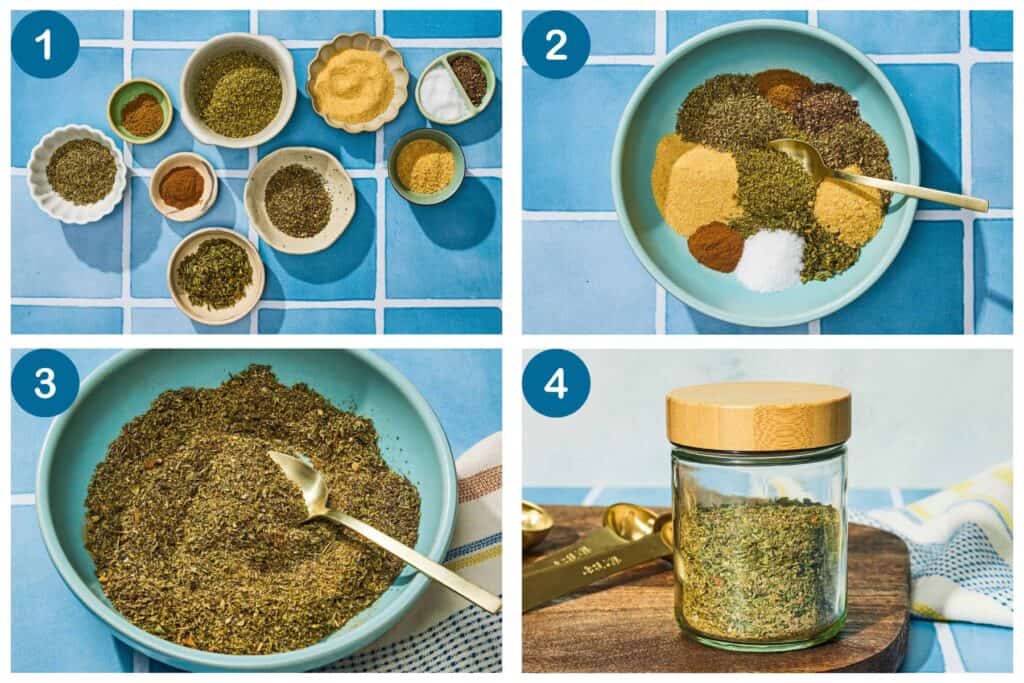
This Greek Seasoning Blend recipe is a great way to use up those half-used jars of herbs and spices in your drawer and turn them into a simple ingredient that you can easily use to make chicken, potatoes, vinaigrette, or anything else you can think of!
- Combine the herbs and spices. In a small bowl, combine 2 1/2 tablespoons dried oregano, 1 tablespoon dried parsley, 1 tablespoon dried thyme, 1 teaspoon dried basil, 1 tablespoon garlic powder, 1 tablespoon onion powder, 1/2 teaspoon ground cinnamon, and 1/2 teaspoon ground cumin. If desired, mix in 1 teaspoon kosher salt and 1 teaspoon freshly ground black pepper.
- Mix and store. Mix well with a spoon, then transfer to a jar and tightly close the lid. Store in a cool, dark place for up to 6 months.
Spotlight on ingredients
I want to dwell on the oregano because it really is the soul of this blend. Not all oregano is the same, and this is when the source really matters. I recommend using real Greek oregano. It’s a different subspecies, grown on the rocky slopes of Greece, and it’s much hotter, pepperier and more aromatic than the milder oregano you’d normally find in the supermarket.
Greek oregano has a higher concentration of essential oils, giving it an unmistakable spicy “bite” that stands up well to flavors like lamb, lemon and grilled meats. If you want your seasoning to have an authentic Greek flavor, this is one ingredient to look for.
- READ MORE: St. John’s wort: Everything you need to know about this important Mediterranean herb
- TRY: Fragrant Greek oregano, grown and harvested in Greece
How to use Greek seasoning
If you have a jar of this on your shelf, you’ll be reaching for it constantly. Here are some of my favorite ways to use it:
- As a dry rub: Coat chicken, lamb chops, pork tenderloin or shrimp generously with seasoning before grilling, baking or pan-frying. This is the perfect quick dressing for these chicken gyros or Greek pan chicken.
- In the marinade: Whisk 1 to 2 tablespoons into a simple mixture of extra virgin olive oil, fresh lemon juice, and minced garlic for one of the most versatile marinades you’ll ever use. Use it in place of herbs in this Greek Chicken Marinade recipe!
- On roasted vegetables: Toss zucchini, eggplant or green beans with olive oil and a generous pinch of seasoning before roasting. It also goes great with these Greek Lemon Potatoes!
- In salad dressing: Add a teaspoon to your favorite olive oil and lemon vinaigrette for an instant version of a ladoleno dressing.
- In soups and stews: Stir a teaspoon into a pot of simmering lentils, white bean soup, or tomato stew for instant depth of flavor.
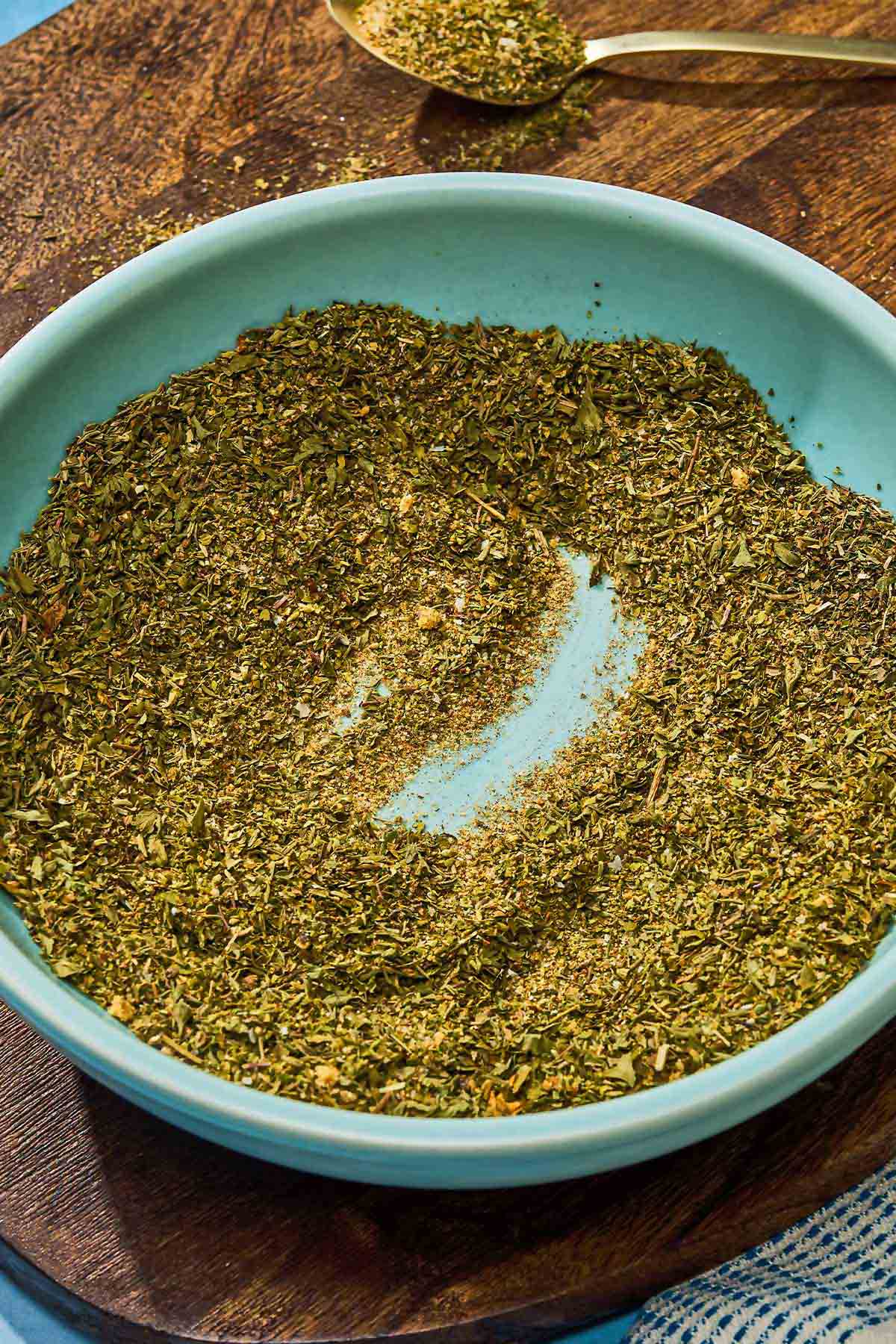
Make it your own
- Avoid salt: Skip the kosher salt and season the food separately while cooking. This gives you complete control over the sodium and makes the mix a versatile pantry staple that you can freely use in any recipe without worrying about oversalting.
- Make it lemony: Add 1 teaspoon of dried lemon zest or lemon powder for a bright citrus note that mimics the squeeze of fresh lemon that appears in many classic Greek dishes.
- Add paprika: Stir in 1/2 teaspoon paprika for a sweet note that gives the mixture an extra dimension when used on grilled or roasted meats, such as pork souvlaki or lamb chops.
- Add dill: Add a teaspoon of dried dill for a mix that’s great with fish, shrimp, and roasted vegetables, or stir into Greek yogurt for a quick tzatziki-style sauce.
How to store homemade Greek seasoning
Store the dressing in a tightly closed jar in a cool, dark place. Ideally, a pantry, drawer or kitchen cabinet away from the stove, as heat and light are the enemies of dried spices. Your Greek dressing will keep well for up to six months this way, although I always say use it sooner rather than later. The aroma is best for the first few months before the essential oils in the herbs begin to fade.
More delicious Greek recipes
- Greek Meatballs (Keftedes)
- Greek chicken and potatoes
- Greek pizza (Ladenia)
Greek seasoning
#wprm-recipe-user-rating-0 .wprm-rating-star.wprm-rating-star-full svg * {fill: #343434; }#wprm-recipe-user-rating-0 .wprm-rating-star.wprm-rating-star-33 svg * {fil: url(#wprm-recipe-user-rating-0-33); }#wprm-recipe-user-rating-0 .wprm-rating-star.wprm-rating-star-50 svg * {fil: url(#wprm-recipe-user-rating-0-50); }#wprm-recipe-user-rating-0 .wprm-rating-star.wprm-rating-star-66 svg * {fil: url(#wprm-recipe-user-rating-0-66); }linearGradient#wprm-recipe-user-rating-0-33 stop {stop-color: #343434; }linearGradient#wprm-recipe-user-rating-0-50 stop {stop-color: #343434; }linearGradient#wprm-recipe-user-rating-0-66 stop {stop-color: #343434; }
Ingredients
- 2 1/2 tablespoons Greek oregano
- 1 a tablespoon dried parsley
- 1 a tablespoon dried thyme
- 1 teaspoon dried basil
- 1 a tablespoon garlic powder
- 1 a tablespoon onion powder
- 1/2 teaspoon ground cinnamon
- 1/2 teaspoon ground cumin
- 1 teaspoon kosher salt (optional)
- 1 teaspoon black pepper (optional)
Instruction
-
Combine the herbs and spices. In a small bowl, combine the oregano, parsley, thyme, basil, garlic powder, onion powder, cinnamon, cumin, salt, and pepper.
-
Mix and store. Mix well with a spoon, then transfer to a jar and tightly close the lid. Store in a cool, dark place for up to 6 months.
Notes
- Buy this recipe: Visit our store browse quality Mediterranean ingredients including oregano and spices is used in this recipe.
Nutrition
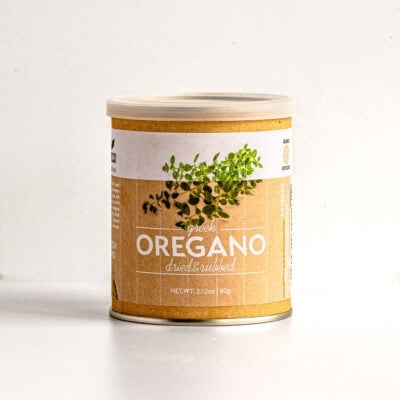
Try our Greek Oregano!
This dried herb from Greece is lemony, fragrant and perfect for daily use.
My Greek Seasoning Blend is a combination of dried herbs with aromatic onions and garlic, along with a few spices typical of Greek cuisine. You can also add salt and pepper if you like!
My recipe for Greek seasoning is herbaceous, peppery and woody, thanks to the use of dried herbs, with a savory background note of garlic and onion and the warmth of cinnamon and cumin.
This Greek seasoning blend is perfect for any grilled meat or seafood, and I personally love it as an all-purpose seasoning for vegetables and potatoes. Add it to yogurt for a light and flavorful marinade.
The post Homemade Greek Seasoning appeared first on The Mediterranean Dish.
PakarPBN
A Private Blog Network (PBN) is a collection of websites that are controlled by a single individual or organization and used primarily to build backlinks to a “money site” in order to influence its ranking in search engines such as Google. The core idea behind a PBN is based on the importance of backlinks in Google’s ranking algorithm. Since Google views backlinks as signals of authority and trust, some website owners attempt to artificially create these signals through a controlled network of sites.
In a typical PBN setup, the owner acquires expired or aged domains that already have existing authority, backlinks, and history. These domains are rebuilt with new content and hosted separately, often using different IP addresses, hosting providers, themes, and ownership details to make them appear unrelated. Within the content published on these sites, links are strategically placed that point to the main website the owner wants to rank higher. By doing this, the owner attempts to pass link equity (also known as “link juice”) from the PBN sites to the target website.
The purpose of a PBN is to give the impression that the target website is naturally earning links from multiple independent sources. If done effectively, this can temporarily improve keyword rankings, increase organic visibility, and drive more traffic from search results.
Jasa Backlink
Download Anime Batch