
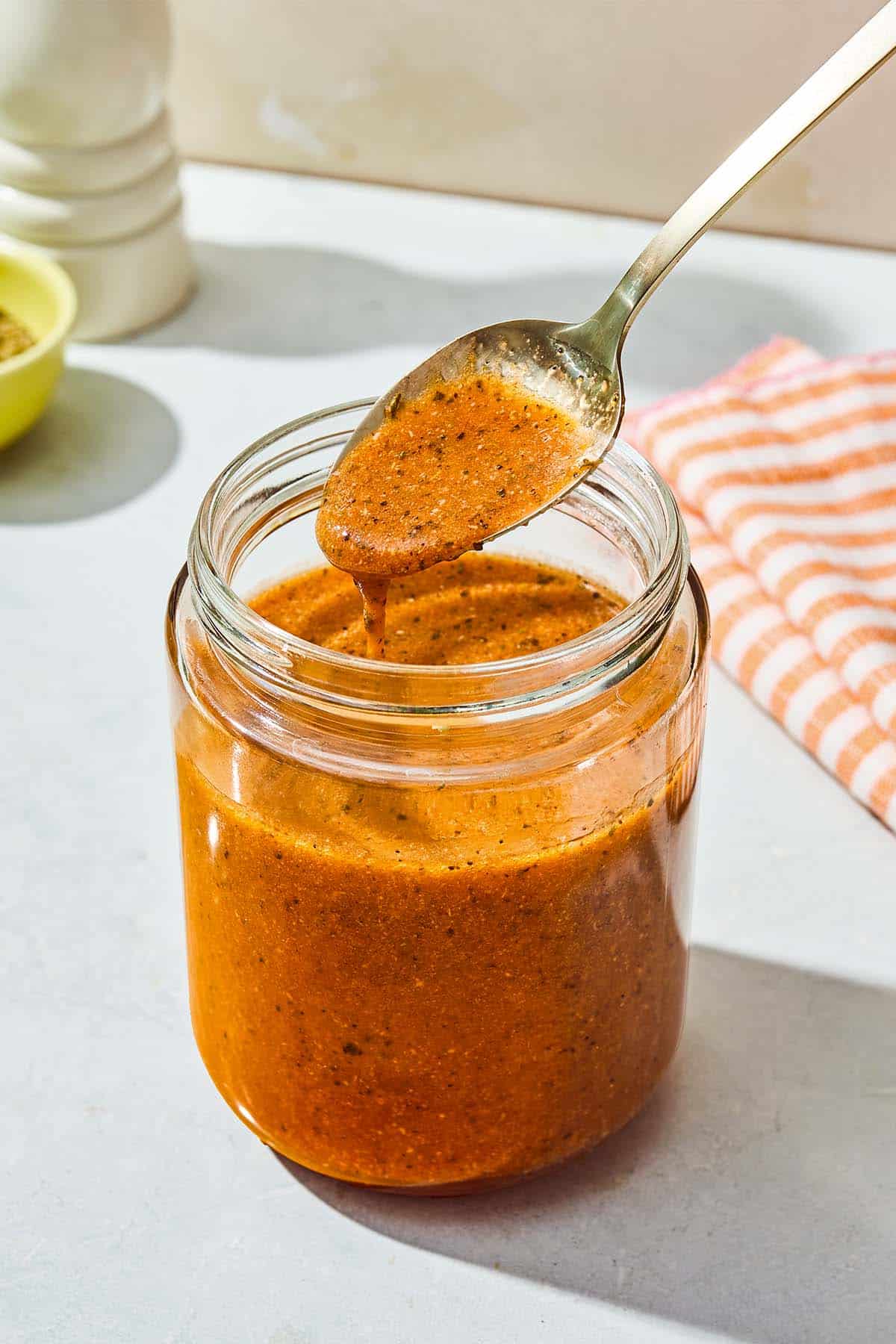
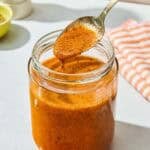
The recipe for this spicy, herb-infused Italian dressing takes just minutes to whip up and packs a whole lot more flavor than store-bought bottles.
Italian dressing for more than salad
When you order a salad in Italy, it won’t come with Italian dressing, but in North America, spicy, herb, garlicky Italian dressing is an absolute staple, and I absolutely love it.
It is indispensable for adding shine to a crisp salad accompanied by eggplant parmesan or a thick Sicilian pizza. It’s a great short marinade for grilled chicken, and it adds dimension to a pasta salad.
However, I’m not a fan of most bottled versions. They are often made with low-quality oils, thickeners (why are they so gloomy?), and a number of preservatives. Also, they are often sweeter than I like.
To create this Italian dressing recipe, I made several batches to get the right ratio of vinegar to olive oil. A small amount of tomato paste contains natural glutamates for spiciness as well as an attractive orange hue. Grated parmesan adds more savory depth. The result is a homemade Italian dressing that tastes better than bottled versions, is more affordable, and only takes a few minutes.
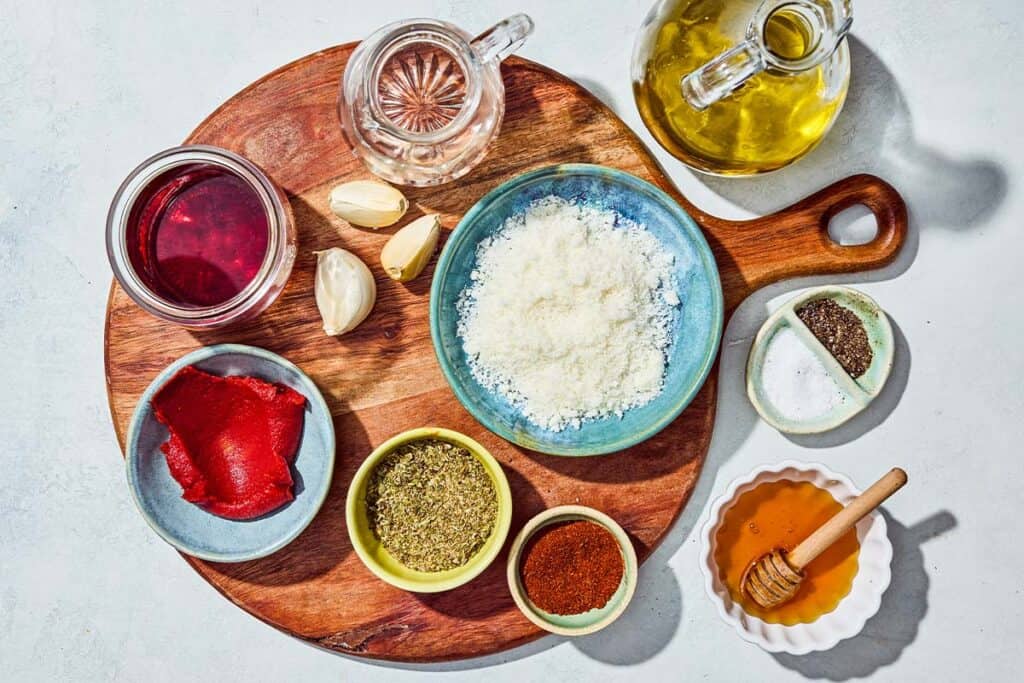
Main ingredients
- Extra virgin olive oil. The base of this dressing is the ingredient you will like the most. Use a good one. I like Private Reserve Greek Olive Oil for its peppery, grassy undertones, while our Italian Nocellara is buttery and smooth.
- Red wine vinegar adds a mild, rounded acidity, but feel free to use white wine vinegar instead.
- White vinegar. Plain old distilled vinegar gives this Italian dressing recipe its signature flavor.
- parmesan cheese provides a nutty savory flavor, unifying the emulsion. Use Pecorino Romano for a spicy, salty, punchier dressing.
- Garlic. I believe that garlic should be the dominant flavor in Italian dressing. I grind the peeled cloves on a fine grater to make a fine paste that is dispersed in the dressing. The heat of the garlic mellows as it sits in the vinegar, but the flavor remains.
- Honey. Just a spoonful softens the vinegar and adds a fragrant, subtle sweetness.
- Tomato paste. The natural glutamates in the tomato paste balance the flavor of the oil and vinegar with spiciness and give it a rosy-orange color.
- Italian seasoning a blend of dried oregano, basil, thyme and other herbs adds character.
- Sweet paprika. The sweet chili adds heat and color.
How to make homemade Italian dressing
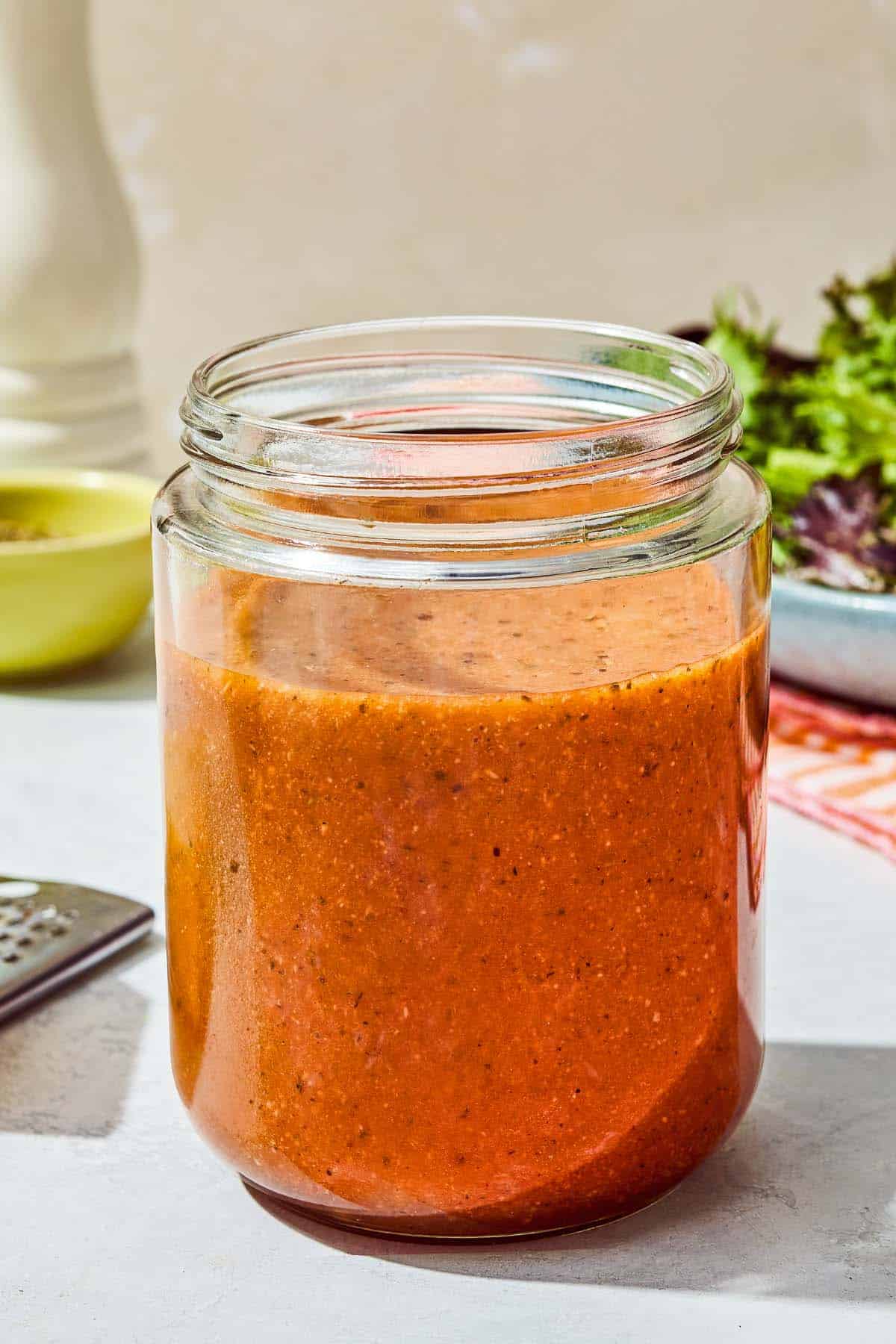
- In a bottle or jar with a tight-fitting lid, combine 2/3 cup extra virgin olive oil, 1/3 cup distilled vinegar, 1/4 cup (1 ounce) packaged finely grated Parmesan cheese, 3 finely grated or grated garlic cloves, 1 tablespoon honey, 1 teaspoon tomato paste, 1 tablespoon Italian seasoning, 1/4 teaspoon paprika, 1/2 teaspoon kosher salt, and 1/2 teaspoon freshly ground black pepper.
- Shake to combine.
- Save leftover dressing in the refrigerator for up to 4 days. Allow to come to room temperature before serving and shake to re-emulsify.
How to make a creamy Italian sauce
There is another version of Italian dressing popularized by a chain of Italian restaurants that is also very popular. It is opaque, light golden in color and creamy in consistency.
You can make this dressing by replacing the tomato paste with a couple of tablespoons of canned mayonnaise, or use another trick I came up with.
- Skip the mayonnaise and replace the tomato paste with one or two hard-boiled egg yolks. Just whip up the dressing with an immersion blender. The egg yolk acts as a natural emulsifier, binding the oil and vinegar into a creamy, smooth dressing.
Bonus: this is a safer option than using raw egg yolk!
History of Italian clothing
Despite the name, Italian seasoning is an American invention. The origin story of what we now think of as Italian dressing—oil, vinegar herbs, and spices—is the legacy of two Italian-American women cooking in different restaurant kitchens in the 1940s.
Florence Hanna, whose family recipe for oil-and-vinegar dressing became so popular at her husband’s steakhouse in Massachusetts that they eventually bottled and sold it under the name Ken’s Salad Dressing, and Lena Salomi, whose Sicilian family recipe became the basis for what became the Wish-Bone brand in Kansas City.
What to cook with Italian dressing
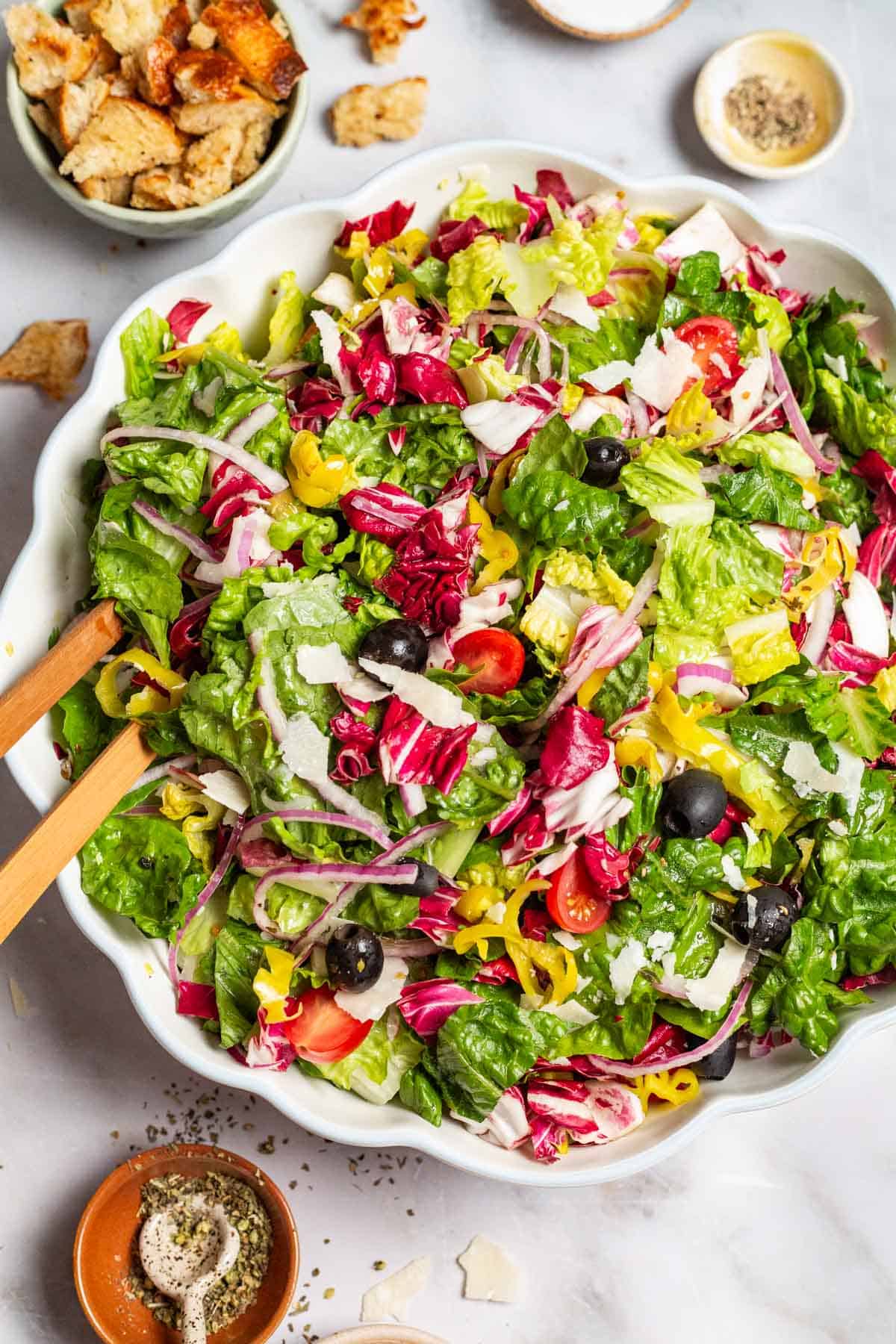
While testing this recipe, I used most of each batch to dress up this big, easy Italian salad. It’s a combination of crisp romaine (and sometimes I add iceberg) with radicchio, tomatoes, olives and pepperoncini.
Fresh greens drizzled with Italian dressing make a great crunchy side dish for shrimp scampi, salmon piccata, or another Italian-American favorite, chicken spedini. This dressing also makes a great marinade for grilled chicken breasts.
If you have a jar handy, here are three more recipes you can use this Italian dressing for.
- Italian pasta salad: Rotini topped with a spicy Italian dressing with salami, pickled artichokes, cherry tomatoes, olives, pepperoncini and fresh mozzarella.
- Tortellini salad with spinach: Cheese filled tortelloni with baby spinach, fresh herbs, mozzarella, olives and sun-dried tomatoes.
- Antipasti salad: A salty, hearty bundle of salami, pepperoni, provolone, mozzarella, artichoke hearts, and olives.
- Use it for more than just salads! Spoon it over the grilled fish as a finishing sauce, mix it with your favorite roasted vegetables or use it as a marinade for chicken.
More homemade dressings
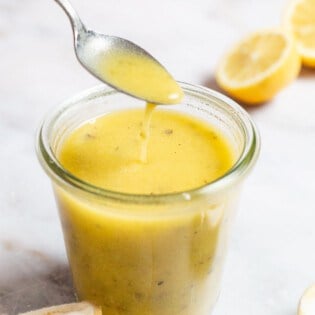
Selections of recipes
10 useful salad dressing recipes
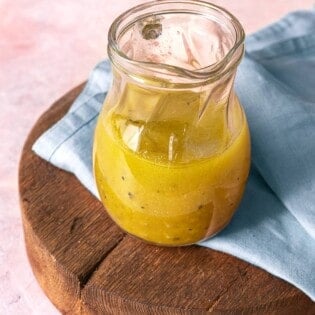
Juices and seasonings
Apple vinaigrette
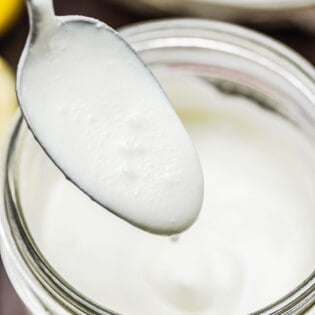
Juices and seasonings
Creamy feta sauce (5 ingredients!)
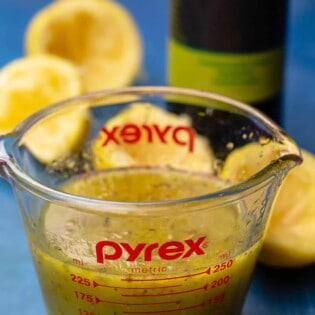
Greek
Ladolemono: Greek Salad Dressing and More!
Italian gas station
#wprm-recipe-user-rating-0 .wprm-rating-star.wprm-rating-star-full svg * {fill: #343434; }#wprm-recipe-user-rating-0 .wprm-rating-star.wprm-rating-star-33 svg * {fil: url(#wprm-recipe-user-rating-0-33); }#wprm-recipe-user-rating-0 .wprm-rating-star.wprm-rating-star-50 svg * {fil: url(#wprm-recipe-user-rating-0-50); }#wprm-recipe-user-rating-0 .wprm-rating-star.wprm-rating-star-66 svg * {fil: url(#wprm-recipe-user-rating-0-66); }linearGradient#wprm-recipe-user-rating-0-33 stop {stop-color: #343434; }linearGradient#wprm-recipe-user-rating-0-50 stop {stop-color: #343434; }linearGradient#wprm-recipe-user-rating-0-66 stop {stop-color: #343434; }
Ingredients
- 2/3 a cup extra virgin olive oil
- 1/3 a cup red wine vinegar
- 1/3 a cup distilled vinegar
- 1/4 a cup packaged finely grated Parmesan cheese (1 ounce)
- 3 garlic cloves, finely chopped or grated
- 1 a tablespoon honey
- 1 teaspoon tomato paste
- 1 a tablespoon Italian seasoning
- 1/4 teaspoon sweet paprika
- 1/2 teaspoon Kosher salt
- 1/2 teaspoon freshly ground black pepper
Instruction
-
Combine and mix. Combine all ingredients in a bottle or jar with a tight lid. Shake to combine. Store leftover dressing in the refrigerator. Allow to come to room temperature before serving and shake to re-emulsify.
Notes
- Buy this recipe: Visit our store browse quality Mediterranean ingredients including olive oil, honey, and Spanish paprika is used in this recipe.
- How to make creamy Italian sauce: To make a creamy, light yellow version of the Italian dressing popularized by chain Italian restaurants, swap out the tomato paste for a couple of tablespoons of canned mayonnaise. Alternatively, whip up the dressing in an immersion blender and add one or two hard-boiled egg yolks. The egg yolk acts as a natural emulsifier, binding the oil and vinegar into a creamy, smooth dressing.
Nutrition
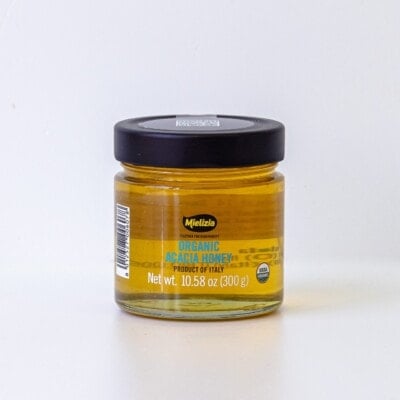
Honey from the Mediterranean!
Experience the delicate sweetness of Italian organic acacia honey, obtained from the lush acacia forests of Peredalp and other regions of the Italian peninsula.
The post Homemade Italian Dressing appeared first on The Mediterranean Dish.
PakarPBN
A Private Blog Network (PBN) is a collection of websites that are controlled by a single individual or organization and used primarily to build backlinks to a “money site” in order to influence its ranking in search engines such as Google. The core idea behind a PBN is based on the importance of backlinks in Google’s ranking algorithm. Since Google views backlinks as signals of authority and trust, some website owners attempt to artificially create these signals through a controlled network of sites.
In a typical PBN setup, the owner acquires expired or aged domains that already have existing authority, backlinks, and history. These domains are rebuilt with new content and hosted separately, often using different IP addresses, hosting providers, themes, and ownership details to make them appear unrelated. Within the content published on these sites, links are strategically placed that point to the main website the owner wants to rank higher. By doing this, the owner attempts to pass link equity (also known as “link juice”) from the PBN sites to the target website.
The purpose of a PBN is to give the impression that the target website is naturally earning links from multiple independent sources. If done effectively, this can temporarily improve keyword rankings, increase organic visibility, and drive more traffic from search results.
Jasa Backlink
Download Anime Batch